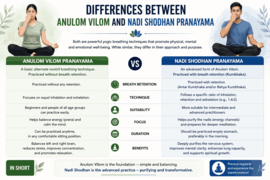
Pranayama, the ancient yogic science of breath control, is one of the most powerful tools for improving physical health, mental clarity, and spiritual well-being. Among the many pranayama techniques practiced today, Anulom Vilom and Nadi Shodhan Pranayama are two of the most popular and beneficial breathing exercises.
Because both techniques involve alternate nostril breathing, many yoga practitioners often assume they are the same practice. However, while they share similarities, there are important differences in their purpose, technique, and level of practice.
Understanding these distinctions can help practitioners choose the most appropriate technique based on their experience level and personal goals.
Understanding the Importance of Pranayama
In yogic philosophy, breath is more than just air entering and leaving the lungs. It is considered the carrier of Prana, the vital life force energy that sustains physical, mental, and spiritual functions.
The ancient yogis developed pranayama techniques to:
- Improve respiratory efficiency
- Balance the nervous system
- Calm the mind
- Increase energy levels
- Enhance concentration
- Prepare the body for meditation
- Purify the subtle energy channels
Both Anulom Vilom and Nadi Shodhan are designed to balance the flow of energy through the body’s primary energy pathways.
What Are Nadis in Yoga?
According to yogic texts, the human body contains more than 72,000 nadis, or subtle energy channels, through which prana flows.
Among these, three major nadis are considered particularly important:
Ida Nadi
Associated with:
- The left nostril
- Lunar energy
- Calmness
- Intuition
- Mental activities
Pingala Nadi
Associated with:
- The right nostril
- Solar energy
- Vitality
- Physical activity
- Dynamic energy
Sushumna Nadi
The central energy channel running along the spine, associated with spiritual awakening and higher states of consciousness.
Both Anulom Vilom and Nadi Shodhan aim to balance Ida and Pingala, creating harmony within the body and mind.
What Is Anulom Vilom Pranayama?
Anulom Vilom, often referred to as Alternate Nostril Breathing, is a simple yet highly effective pranayama technique suitable for practitioners of all levels.
The Sanskrit words mean:
- Anulom = with the natural order
- Vilom = against the natural order
The practice involves inhaling through one nostril and exhaling through the opposite nostril in a continuous and rhythmic pattern.
How to Practice Anulom Vilom
A basic round of Anulom Vilom includes:
- Close the right nostril.
- Inhale slowly through the left nostril.
- Close the left nostril.
- Exhale through the right nostril.
- Inhale through the right nostril.
- Close the right nostril.
- Exhale through the left nostril.
This completes one round.
The breath remains smooth and continuous without holding or retaining it.
Benefits of Anulom Vilom
Regular practice of Anulom Vilom may help:
- Reduce stress and anxiety
- Improve lung capacity
- Enhance oxygen supply
- Balance the nervous system
- Improve concentration
- Promote emotional stability
- Prepare the mind for meditation
Because it is simple and safe, it is often recommended as a starting pranayama practice for beginners.
What Is Nadi Shodhan Pranayama?
Nadi Shodhan is a more advanced form of alternate nostril breathing.
The Sanskrit words mean:
- Nadi = Energy channel
- Shodhan = Purification or cleansing
The primary objective of Nadi Shodhan is to purify the body’s subtle energy pathways and create a deeper balance of prana.
While the breathing pattern resembles Anulom Vilom, the major difference lies in the incorporation of Kumbhaka (breath retention).
The Role of Kumbhaka in Nadi Shodhan
Breath retention is considered one of the most powerful aspects of advanced pranayama practice.
There are two primary forms of kumbhaka:
Antar Kumbhaka (Internal Retention)
This occurs after inhalation.
Example:
- Inhale through the left nostril.
- Hold the breath inside.
- Exhale through the right nostril.
Bahya Kumbhaka (External Retention)
This occurs after exhalation.
Example:
- Exhale through the right nostril.
- Hold the breath outside.
- Begin the next inhalation.
Advanced practitioners may use both types of retention within a single cycle.
How to Practice Nadi Shodhan Pranayama
A traditional round may include:
- Inhale through the left nostril.
- Hold the breath inside.
- Exhale through the right nostril.
- Hold the breath outside.
- Inhale through the right nostril.
- Hold the breath inside.
- Exhale through the left nostril.
- Hold the breath outside.
This completes one cycle.
The duration of retention varies according to experience and should always be practiced gradually under proper guidance.
Key Differences Between Anulom Vilom and Nadi Shodhan
| Feature | Anulom Vilom | Nadi Shodhan |
|---|---|---|
| Difficulty Level | Beginner-friendly | Intermediate to Advanced |
| Breath Retention | No retention | Includes breath retention (Kumbhaka) |
| Primary Purpose | Balance breathing and calm the mind | Purify energy channels and deepen pranayama practice |
| Technique Complexity | Simple | More advanced |
| Energy Work | Gentle balancing | Deep energetic purification |
| Suitable For | All practitioners | Experienced practitioners |
| Preparation Required | Minimal | Proper understanding of breath retention |
Which Practice Should You Choose?
Choose Anulom Vilom If:
- You are new to pranayama.
- You want to reduce stress and anxiety.
- You want a simple daily breathing practice.
- You are preparing for meditation.
- You are developing breath awareness.
Anulom Vilom creates a strong foundation for future pranayama practices.
Choose Nadi Shodhan If:
- You already have experience with pranayama.
- You are comfortable with breath control.
- You want to deepen your energetic practice.
- You are interested in traditional yogic purification techniques.
- You practice under the guidance of a qualified yoga teacher.
Safety Guidelines for Practice
Pranayama should always be practiced mindfully.
Important Recommendations
- Practice on an empty stomach.
- Sit comfortably with an upright spine.
- Never force the breath.
- Begin with short durations.
- Avoid excessive breath retention.
- Stop if you experience dizziness or discomfort.
- Learn advanced retention techniques from an experienced teacher.
Individuals with respiratory conditions, heart problems, or high blood pressure should consult a healthcare professional before attempting advanced pranayama practices.
The Spiritual Significance of Nadi Shodhan
In traditional yoga, purification of the nadis is considered essential for deeper meditation and spiritual development.
When Ida and Pingala become balanced, the flow of prana can move more freely through Sushumna Nadi, which is associated with:
- Inner awareness
- Meditation
- Mental clarity
- Spiritual awakening
This is one of the reasons Nadi Shodhan has been highly valued by yogis for centuries.
Conclusion
Although Anulom Vilom and Nadi Shodhan Pranayama appear similar on the surface, they serve different purposes within yogic practice.
Anulom Vilom focuses on balancing the breath, calming the mind, and improving overall well-being through simple alternate nostril breathing. It is ideal for beginners and can be practiced safely by most individuals.
Nadi Shodhan takes the practice a step further by incorporating breath retention techniques that help purify the subtle energy channels and deepen the practitioner’s connection to pranayama and meditation.
Both techniques offer tremendous benefits when practiced consistently and correctly. Whether you choose the simplicity of Anulom Vilom or the deeper purification of Nadi Shodhan, these ancient breathing practices can significantly enhance your physical health, mental clarity, and spiritual growth.
Frequently Asked Questions (FAQs)
Are Anulom Vilom and Nadi Shodhan the same?
No. Both involve alternate nostril breathing, but Nadi Shodhan includes breath retention (kumbhaka), while Anulom Vilom does not.
Which is better for beginners?
Anulom Vilom is generally recommended for beginners because it is simpler and does not involve breath retention.
What is the purpose of Nadi Shodhan?
Nadi Shodhan aims to purify the body’s subtle energy channels (nadis) and balance the flow of prana.
Can I practice Nadi Shodhan without retention?
If practiced without retention, it closely resembles Anulom Vilom. Traditional Nadi Shodhan typically includes kumbhaka.
How long should I practice Anulom Vilom daily?
Beginners can start with 5–10 minutes and gradually increase the duration as they become comfortable.
Is breath retention necessary in pranayama?
Not all pranayama techniques require retention. However, kumbhaka is an important aspect of many advanced pranayama practices.
Can pranayama help reduce stress?
Yes. Both Anulom Vilom and Nadi Shodhan can help calm the nervous system, reduce stress, and improve mental clarity.
Should I learn Nadi Shodhan from a teacher?
Yes. Because breath retention can affect the nervous system and energy flow, learning from an experienced yoga teacher is recommended.

Hi, I’m Amrita Pandey. I specialize in writing about health, pregnancy, yoga, natural remedies, beverages, fruits, and vegetables. I enjoy creating clear, well-researched content that helps readers make informed decisions and build healthier everyday habits.