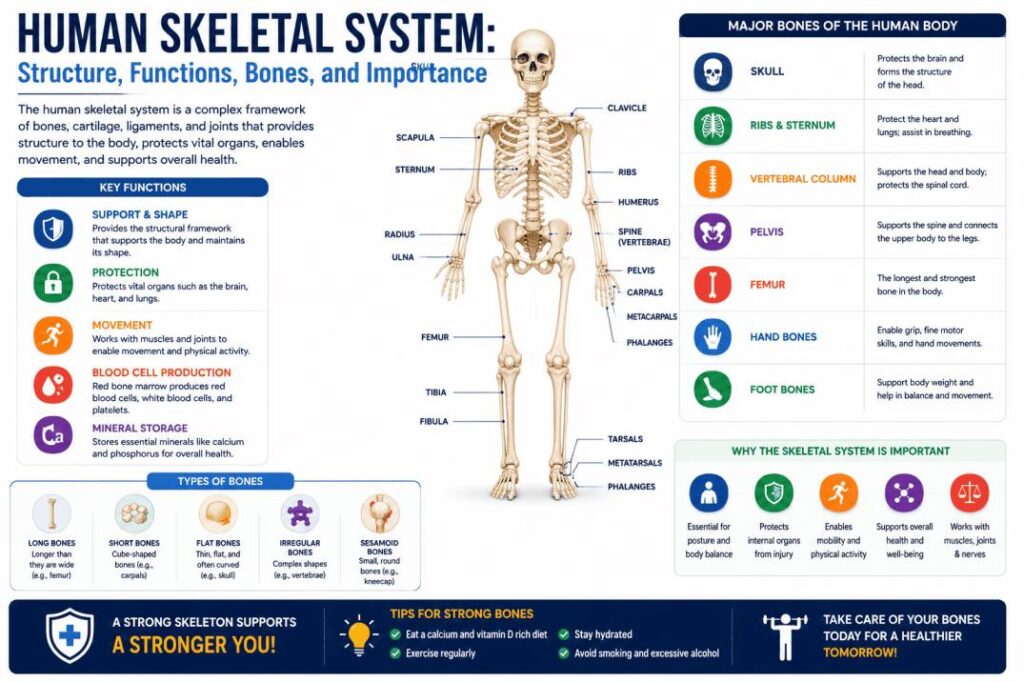
The human skeletal system is the structural framework of the body that provides support, protection, movement, and stability. It is composed of bones, cartilage, ligaments, tendons, and joints that work together to maintain posture and enable physical movement.
An adult human skeleton consists of 206 bones, forming a complex yet highly organized structure that supports every part of the body. Without the skeletal system, humans would be unable to stand, walk, move, or protect vital organs such as the brain, heart, and lungs.
In addition to providing structural support, the skeletal system plays a vital role in blood cell production, mineral storage, and overall body function.
What Is the Human Skeletal System?
The skeletal system is a network of bones and connective tissues that provides shape and support to the body. It acts as a framework upon which muscles attach, allowing movement through the interaction of bones, joints, and muscles.
The major components of the skeletal system include:
- Bones
- Cartilage
- Ligaments
- Tendons
- Joints
- Bone marrow
Together, these structures create a strong yet flexible system capable of supporting daily activities and protecting essential organs.
Main Functions of the Skeletal System
1. Support and Structure
The skeleton provides the body’s framework and helps maintain its shape. It allows us to stand upright and gives support to muscles, organs, and tissues.
2. Protection of Vital Organs
Several bones protect important organs from injury.
Examples include:
- The skull protects the brain.
- The rib cage protects the heart and lungs.
- The vertebral column protects the spinal cord.
3. Movement and Mobility
Bones work together with muscles and joints to create movement. Muscles pull on bones, allowing activities such as walking, running, bending, and lifting.
4. Blood Cell Production
Bone marrow inside certain bones produces:
- Red blood cells
- White blood cells
- Platelets
This process is known as hematopoiesis.
5. Mineral Storage
Bones store essential minerals, including:
- Calcium
- Phosphorus
- Magnesium
These minerals can be released into the bloodstream when needed.
Structure of the Human Skeleton
The human skeleton is divided into two major sections:
Axial Skeleton
The axial skeleton forms the central axis of the body and includes:
- Skull
- Vertebral column
- Rib cage
- Sternum
Functions
- Supports the head and trunk
- Protects the brain, spinal cord, and internal organs
Appendicular Skeleton
The appendicular skeleton consists of:
- Shoulders
- Arms
- Hands
- Pelvis
- Legs
- Feet
Functions
- Facilitates movement
- Provides attachment points for muscles
Understanding the Vertebral Column (Spine)
The vertebral column, commonly called the spine, is one of the most important structures in the body.
It consists of 33 vertebrae, some of which fuse together during adulthood.
Cervical Vertebrae
The neck contains 7 cervical vertebrae.
Functions include:
- Supporting the head
- Allowing neck movement
- Protecting the spinal cord
Thoracic Vertebrae
The upper and mid-back contain 12 thoracic vertebrae.
These vertebrae connect to the ribs and help protect the chest organs.
Lumbar Vertebrae
The lower back contains 5 lumbar vertebrae.
These are the largest vertebrae and bear much of the body’s weight.
Sacrum
The sacrum is a triangular bone formed by 5 fused vertebrae.
It connects the spine to the pelvis and provides stability.
Coccyx (Tailbone)
The coccyx is formed by 3–5 fused vertebrae and serves as an attachment point for muscles and ligaments.
The Importance of the Spinal Cord
The spinal cord is a bundle of nerve tissue that extends from the brain through the vertebral column.
Its functions include:
- Transmitting signals between the brain and body
- Controlling movement
- Regulating reflexes
- Supporting sensory functions
Because the spinal cord is so important, the vertebral column acts as a protective shield around it.
The Shoulder Girdle and Upper Body Bones
Clavicle (Collarbone)
The clavicle connects the arm to the torso and helps stabilize shoulder movements.
Scapula (Shoulder Blade)
The scapula is a flat triangular bone that provides attachment points for multiple muscles and supports shoulder mobility.
Together, the clavicle and scapula form the shoulder girdle.
Understanding the Rib Cage
The human rib cage consists of 12 pairs of ribs.
True Ribs
The first seven pairs are called true ribs because they connect directly to the sternum through cartilage.
False Ribs
The remaining five pairs are known as false ribs because they do not attach directly to the sternum.
Functions of the Rib Cage
- Protects the heart
- Protects the lungs
- Supports breathing movements
Muscles and Their Relationship with the Skeleton
The skeletal system works closely with muscles to create movement.
The human body contains more than 600 muscles, many of which are attached to bones through tendons.
Voluntary Muscles
Voluntary muscles are controlled consciously.
Examples include:
- Arm muscles
- Leg muscles
- Neck muscles
Involuntary Muscles
Involuntary muscles function automatically without conscious control.
Examples include:
- Heart muscle
- Digestive system muscles
- Blood vessel walls
Intervertebral Discs: The Spine’s Shock Absorbers
Between each vertebra lies a soft, cushion-like structure called an intervertebral disc.
Functions of Discs
- Absorb shock
- Reduce friction
- Improve flexibility
- Protect vertebrae from damage
Without these discs, everyday movements would place excessive stress on the spine.
The Role of Skin in Protecting the Body
The entire skeletal and muscular system is covered by skin, the body’s largest organ.
Skin consists of two primary layers:
Epidermis
The outer protective layer.
Dermis
The deeper layer containing:
- Sweat glands
- Blood vessels
- Nerves
- Hair follicles
The skin helps regulate body temperature and protects the body from environmental damage.
How to Maintain a Healthy Skeletal System
Strong bones and a healthy spine are essential for long-term wellness.
Maintain Good Posture
Keeping the spine aligned helps reduce strain on muscles and joints.
Exercise Regularly
Weight-bearing activities help maintain bone density and muscle strength.
Eat a Nutrient-Rich Diet
Important nutrients include:
- Calcium
- Vitamin D
- Magnesium
- Protein
Stay Active
Regular movement helps maintain flexibility, mobility, and joint health.
Avoid Prolonged Slouching
Poor posture can place excessive pressure on the spine and lead to long-term discomfort.
Interesting Facts About the Human Skeleton
- Babies are born with approximately 270 bones.
- Adults have 206 bones.
- The femur (thigh bone) is the longest and strongest bone in the body.
- The stapes in the ear is the smallest bone in the body.
- Bone tissue is constantly being remodeled throughout life.
- The human skeleton renews itself approximately every 10 years.
Conclusion
The human skeletal system is one of the most remarkable structures in the body. It provides support, protection, mobility, and strength while working closely with muscles, joints, and nerves to perform countless daily functions.
Understanding how the skeletal system works helps us appreciate the importance of maintaining healthy bones, good posture, and an active lifestyle. By caring for our skeletal health through proper nutrition, exercise, and mindful movement, we can improve our quality of life and support long-term physical well-being.
Frequently Asked Questions (FAQs)
How many bones are in the human body?
An adult human body contains 206 bones.
What is the main function of the skeletal system?
The skeletal system provides support, protection, movement, blood cell production, and mineral storage.
What are the two major divisions of the skeleton?
The skeleton is divided into the axial skeleton and the appendicular skeleton.
How many vertebrae are in the human spine?
The human spine contains 33 vertebrae, some of which fuse together in adulthood.
What are intervertebral discs?
They are soft cartilage structures located between vertebrae that absorb shock and allow spinal flexibility.
Which bone is the strongest in the human body?
The femur, or thigh bone, is the strongest and longest bone in the human body.
Why is posture important for spinal health?
Good posture helps maintain spinal alignment, reduces stress on joints and muscles, and lowers the risk of back pain.
How can I keep my bones healthy?
Regular exercise, proper nutrition, adequate calcium and vitamin D intake, and maintaining good posture all contribute to strong and healthy bones.

Hi, I’m Amrita Pandey. I specialize in writing about health, pregnancy, yoga, natural remedies, beverages, fruits, and vegetables. I enjoy creating clear, well-researched content that helps readers make informed decisions and build healthier everyday habits.