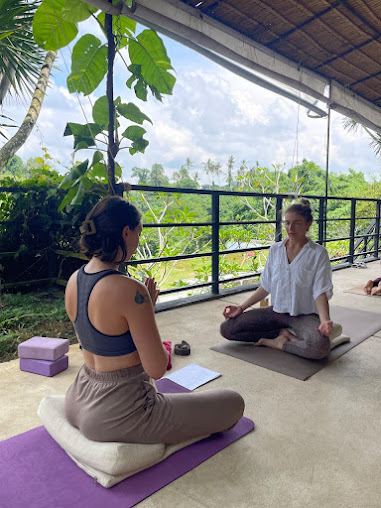
Bali has been the world’s unofficial capital for yoga teacher training for over a decade, and 2026 hasn’t slowed that down. Between Ubud’s rice-field shalas, Canggu’s beach-and-café energy, and Uluwatu’s cliffside calm, there’s a course here for almost every kind of practitioner — beginner, advanced, spiritually curious, or purely interested in nailing their alignment cues.
This list leans on real programs currently running in Bali: their locations, styles, durations, and what past students actually say about them. Sitting at the top is Blooming Lotus Yoga, a school that’s built its reputation on going deeper than the standard asana-and-certificate format.
1. Blooming Lotus Yoga — Ubud
If one school in Bali is known for treating yoga as more than a physical workout, it’s Blooming Lotus. Tucked into a jungle setting above a sacred river, directly across from a traditional Balinese temple, the school runs a 23-day, Yoga Alliance-registered 200-hour YTT that leans heavily into the spiritual and philosophical side of the practice — meditation, pranayama, mantra, tantra, Vedanta, Ayurveda, yoga nidra, and self-inquiry sit alongside the expected asana training.
The physical style taught is Hatha-Flow / Vinyasa, plus Restorative-Yin, so graduates leave equipped to teach a wide range of classes. Prerequisites are stricter than most Bali schools — a minimum of two years of yoga practice and a minimum age of 21 — which keeps class sizes intimate and the group more experienced.
Accommodation is private villas with a plunge pool, kitchen, and living room, plus access to a shared pool, an on-site vegan restaurant (Amrita), and a healing spa. The school has picked up a TripAdvisor Certificate of Excellence and a Yoga Retreat/Yoga School of the Year award, and a meaningful share of proceeds goes toward charitable projects in Bali and India — a detail past students mention often in reviews. What comes through most in testimonials isn’t the facilities, though — it’s the emotional weight of the experience, with many graduates describing it as one of the most transformative things they’ve done.
Best for: practitioners who want a spiritually immersive, philosophy-heavy training rather than a purely physical certification.
2. SKY Yoga & Meditation — Ubud
Frequently cited as the top pick among Bali’s Hatha-focused schools, SKY Yoga & Meditation has built a loyal following for its traditional, unhurried approach to teaching. It suits practitioners who want a slower, more meditative Hatha foundation rather than a fast-paced Vinyasa flow.
Best for: Hatha purists and anyone wanting a gentler, more contemplative pace.
3. Loka Yoga School — Kedungu
Right on the beach in Kedungu, Loka blends multiple yoga styles with a strong anatomy component — the Yoga Anatomy module is taught by a medical professional, which reviewers consistently point to as a standout. Its philosophy, summed up as “where science meets spirituality,” makes it a good fit for practitioners who want their training grounded in both tradition and evidence.
Best for: students who want serious anatomy training alongside spiritual content.
4. House of Om — Multiple Locations
House of Om runs one of the highest-volume 200-hour programs in Bali, with a consistent 20-day schedule across several locations. Founded in 2016, it’s Yoga Alliance-certified and has built a global brand, including a hybrid option that combines shorter in-person training with self-paced online modules — useful for students who can’t commit to a full block of weeks in Bali.
Best for: students who want flexibility, including a hybrid/part-online format.
5. All Yoga Training — Nusa Lembongan
Rated a top pick for most people in several independent comparisons, All Yoga Training runs its 200-hour Ashtanga Vinyasa course from a beachfront shala on Nusa Lembongan, capping classes at 24 students. Prices start around $1,699, and most packages include accommodation.
Best for: an island-life beachfront setting with a solid Ashtanga Vinyasa foundation.
6. Maharishi Yoga Peeth — Ubud
Positioned as one of the strongest budget options in Ubud, Maharishi Yoga Peeth focuses on traditional Hatha training without the luxury price tag of some of its neighbors.
Best for: students prioritizing value without giving up quality instruction.
7. Joga Yoga Training — Canggu
A structured, practical 200-hour program that covers Hatha, Vinyasa, Ashtanga, and Yin, giving graduates a genuinely multi-style foundation. Pricing runs roughly €1,550–€2,999 depending on accommodation choice. The program leans into teaching practice, alignment, and sequencing more than pure philosophy.
Best for: future teachers who want to walk away comfortable leading several different class styles.
8. YogaUnion Shala — Ubud
Set right in Bali’s rice fields, YogaUnion has built a strong reputation for its sense of community as much as its curriculum. Students frequently mention the teaching quality of instructors like Himanshu and Fabian, along with the food and accommodations at the attached Earth Shala.
Best for: students who want the classic “rice-field yoga” Ubud experience with a tight-knit cohort.
9. Power of Now Oasis — Sanur
Operating since 2010 from a bamboo, eco-friendly shala on Sanur’s Mertasari beach, Power of Now Oasis offers an ocean-view 200-hour training led by experienced teachers, including E-RYT 500-level instructors. The beachfront setting is a genuine point of difference from Ubud’s inland, jungle-heavy schools.
Best for: students who want beach proximity without Canggu’s nightlife-driven scene.
10. Yogmantra Bali — Ubud
A 25-day, 200-hour course covering Hatha, Vinyasa, and Ashtanga, with a free Ayurveda healing and cooking class and daily massage folded into the program. Food is a major focus here — gluten-free, vegetarian, and vegan meals made from local Balinese ingredients.
Best for: students who want Ayurveda and food-as-medicine content built into their training.
11. Shades of Yoga (SOY) — Ubud
Known for small class sizes (as few as nine students) and a location overlooking rice fields, Shades of Yoga draws consistent praise for the personal attention students receive and the balance between philosophy lectures and physical practice.
Best for: students who want a genuinely small, intimate cohort.
12. Radiantly Alive — Ubud
An “eco-hip” studio in Ubud’s Monkey Forest village area, Radiantly Alive runs Yoga Alliance USA-accredited teacher trainings across two purpose-built shalas, alongside a broader class schedule spanning Vinyasa, Ashtanga, and acroyoga.
Best for: students who want a studio with an active daily class culture, not just a training-only space.
13. Ashtanga Yoga Bali Research Center — Ubud
For practitioners specifically chasing traditional Ashtanga Mysore-style training, this jungle-based center is one of the most respected names in Bali. Teachers Radha and Prem are frequently singled out for their hands-on, detail-focused adjustments and their grounding in Sri K. Pattabhi Jois’s original method.
Best for: committed Ashtanga practitioners who want a Mysore-style, tradition-first approach.
14. Inner Yoga Training (Azadi Retreat) — Ubud
Based at the Azadi Retreat with views of Mt. Agung and Mt. Batur, this 22-night program blends daily pranayama, meditation, and Vinyasa with evening Yin sessions. Reviewers highlight the food quality and the peaceful, green setting as much as the curriculum itself.
Best for: students who want a longer immersion with strong scenery and food as part of the draw.
15. Bali Yoga School — Bali-wide
With roots tracing back to the Himalayan Yoga Association in Rishikesh, Bali Yoga School brings a India-rooted lineage to its Bali-based training and retreat offerings, alongside customizable retreat packages.
Best for: students who want their training connected to a traditional Rishikesh lineage.
16. Samasti — Bali
Described by past students as a genuinely transformational experience that exceeded expectations set by prior reviews, Samasti has built a reputation on delivering more than its marketing promises — a detail worth noting in an industry full of overstated claims.
Best for: students who’ve been burned by over-hyped programs before and want something that under-promises.
17. Ubud Yoga House — Ubud
Set just off the main pathway in the middle of a rice field, Ubud Yoga House keeps its groups small — around 11 students against a cap of 12 — and stands out for teaching multiple styles rather than defaulting to Vinyasa-only, including dedicated Iyengar classes, workshops, and asana labs.
Best for: students who want Iyengar-style alignment training alongside the standard curriculum.
18. The Yoga Barn — Ubud
One of the most recognized names in global yoga, The Yoga Barn runs seven studios, 100+ weekly classes, and regular teacher trainings out of its central Ubud campus. It’s less intimate than the smaller schools on this list, but the sheer range of styles on offer — from aerial yoga to kundalini to sound healing — makes it a strong choice for students who want built-in access to Ubud’s biggest wellness community.
Best for: students who want to train inside Ubud’s most established yoga hub.
19. Ubuntu Bali Eco Yoga Retreat — Canggu
A quieter, eco-focused alternative to Canggu’s louder studios, Ubuntu Bali offers a peaceful shala setting with a strong local following, expert instructors, and a wide variety of class styles for a spot tucked into Canggu’s outskirts.
Best for: students who want Canggu’s convenience without Canggu’s crowds.
20. Samadi Bali — Canggu
Rounding out the list, Samadi is a well-known Canggu wellness center offering yoga teacher trainings alongside its regular class schedule, pool, and healthy-food restaurant — a solid option for students who want their training embedded in a broader wellness campus rather than a standalone retreat.
Best for: students who want amenities (pool, café, community events) built around their training.
How to Choose Between Them
A few honest questions worth asking before you book:
Do you want spiritual depth or a physical foundation? Blooming Lotus, Ashtanga Yoga Bali Research Center, and Inner Yoga Training lean heavily into philosophy and inner work. Loka, All Yoga Training, and Joga Yoga Training lean more toward technical, physical instruction.
Do you want a big campus or a small group? The Yoga Barn and House of Om run at scale. Shades of Yoga, Ubud Yoga House, and Blooming Lotus keep numbers small on purpose.
Do you have the required experience? Some schools, like Blooming Lotus, ask for a minimum of two years of practice before you enroll — worth checking against your own background before you commit.
What’s your budget? Prices across this list span from roughly $1,699 at the lower end to $4,000+ for premium, boutique programs. Location, meals, accommodation quality, and class size all factor into where a school lands on that range.
Whichever you choose, a 200-hour YTT in Bali is a genuine commitment — three to four weeks, daily practice, and a fair amount of homework. Picking a school whose approach actually matches what you’re looking for matters more than picking whichever one ranks highest on a list like this one.
Frequently Asked Questions
What is the best yoga teacher training in Bali?
There’s no single “best” — it depends on what you’re looking for. Blooming Lotus Yoga stands out for students who want a spiritually immersive, philosophy-heavy training rooted in yoga, tantra, and Vedanta. If you want a more physical, technique-focused course instead, schools like Loka Yoga School or All Yoga Training in Nusa Lembongan are better matches. The right answer really comes down to your own goals, experience level, and preferred learning environment.
How long does a yoga teacher training in Bali take?
Most 200-hour programs run three to four weeks. On this list, durations range from 20 days (House of Om) to 25 days (Yogmantra Bali) to 23 days (Blooming Lotus Yoga). A few schools also offer hybrid formats that shorten the in-person portion and move some material online.
How much does a 200-hour YTT in Bali cost?
Prices vary widely based on accommodation, meals, and school reputation. Budget-friendly options start around $1,699 (All Yoga Training), mid-range programs run roughly €1,550–€2,999 (Joga Yoga Training), and premium, boutique schools can run $4,000 or more depending on villa-style accommodation and included extras like spa treatments.
Do I need prior yoga experience to join a teacher training?
It depends on the school. Some, like Blooming Lotus Yoga, require a minimum of two years of dedicated practice and a minimum age of 21, prioritizing students with meditation or spiritual-practice backgrounds. Others are more open to committed beginners who’ve built a consistent home practice. Always check a school’s specific prerequisites before applying.
Is Yoga Alliance certification necessary to teach yoga?
No — Yoga Alliance is an American registry, not a legal requirement to teach. Most reputable Bali schools, including all the ones on this list, are Yoga Alliance-registered, which makes it easier to register internationally and reassures studios that hire you. But your actual certificate from the school is often what studios ask to see first, so check with where you plan to teach before assuming you need the registry.
Which area of Bali is best for yoga teacher training — Ubud, Canggu, or Uluwatu?
Ubud is Bali’s traditional yoga hub — spiritual, jungle-set, and home to the majority of schools on this list, including Blooming Lotus Yoga, The Yoga Barn, and Ashtanga Yoga Bali Research Center. Canggu offers a more modern, social vibe with cafés and a younger international crowd (Joga Yoga Training, Ubuntu Bali, Samadi Bali). Uluwatu and coastal spots like Sanur and Nusa Lembongan suit students who want ocean views and ocean or surf town living during training (Power of Now Oasis, All Yoga Training).
Can I start teaching yoga right after finishing a 200-hour YTT?
Yes. A completed 200-hour training equips you with the essential skills to teach beginner and intermediate classes, typically across Hatha, Vinyasa, and Yin styles depending on what your program covered. Many graduates start by teaching friends, community classes, or gyms before moving into studio positions, and some go on to further training at the 300- or 500-hour level.
What should I pack or prepare for a Bali yoga teacher training?
Beyond a yoga mat (most schools provide one, but bringing your own is common), pack lightweight, breathable clothing for Bali’s humidity, a journal for philosophy and self-inquiry work, and be ready for an intensive daily schedule — most programs combine two yoga sessions, lectures, and homework into a full day. Many schools, including Blooming Lotus Yoga, also ask for a decent grasp of English since courses are taught in it.

Hi, I’m Amrita Pandey. I specialize in writing about health, pregnancy, yoga, natural remedies, beverages, fruits, and vegetables. I enjoy creating clear, well-researched content that helps readers make informed decisions and build healthier everyday habits.