We are more connected by technology than ever before, yet millions of people say they feel alone. Here is what is behind the loneliness epidemic, how it affects your health, and simple steps to feel connected again.
You can have hundreds of contacts on your phone, dozens of unread group chats and a busy workplace, and still go to bed feeling that nobody truly knows you. If that sounds familiar, you are far from alone. Health experts around the world now talk about a loneliness epidemic, and it has become one of the fastest-rising health topics online.
The US Surgeon General issued a public advisory on loneliness and isolation in 2023, and the World Health Organization has set up a commission on social connection, treating it as a real public health concern. In this guide, we will explain what loneliness really is, why it is growing, how it affects mind and body, and what practical steps can help, whether you are a student, a working professional, a parent or a senior citizen.
What Is Loneliness?
Loneliness is the painful feeling that your relationships are not what you need them to be. It is not about how many people are around you. It is about whether you feel seen, understood and supported. You can feel lonely at a wedding, in a hostel, in an office or even in a happy family.
It helps to separate three ideas that people often mix up:
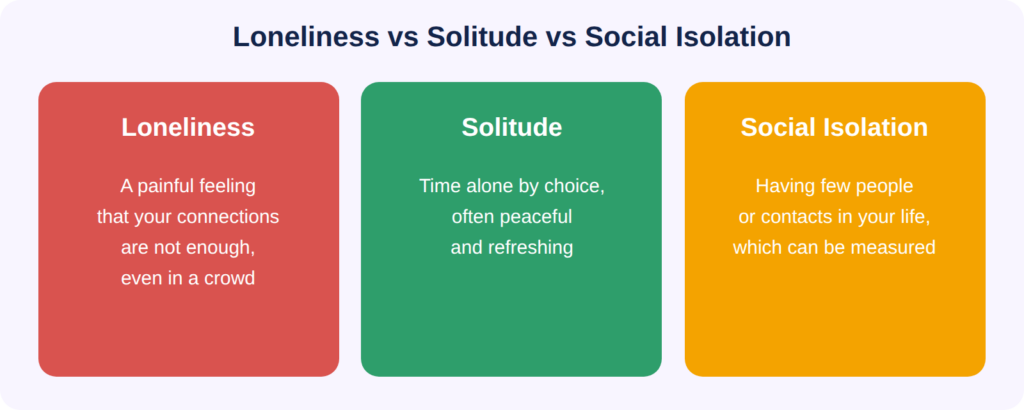
- Loneliness is a feeling of missing connection.
- Solitude is enjoyable time alone that you choose.
- Social isolation is having few social contacts or interactions, whether or not you feel lonely.
Someone can live alone and feel content, while another person surrounded by relatives can feel deeply lonely. The quality of connection matters more than the quantity.
Why Is It Called an Epidemic?
The word “epidemic” is used because loneliness is widespread, is linked with serious health risks, and appears to be rising in many countries. Surveys across the world regularly find that a large share of adults, and especially young adults, report feeling lonely often. Researchers have also found that loneliness is not only an older-age problem. Teenagers and people in their twenties and thirties frequently report high levels.
What Is Driving the Loneliness Epidemic?
1. Digital Life Replacing Real Contact
Messaging and social media keep us “in touch”, but scrolling through other people’s highlights is not the same as sharing a meal or a long conversation. Heavy passive use of social media has been linked in many studies with lower mood and comparison stress.
2. Remote Work and Busy Schedules
Working from home saves commuting time but removes casual office chats, lunch breaks and friendships that once formed naturally. Long work hours leave little energy for meeting friends.
3. Migration and Moving Cities
Many people in India and elsewhere move to a new city for education or jobs. Leaving behind family, school friends and neighbours means rebuilding a social circle from zero, which takes time and effort.
4. Changing Family Structures
Smaller nuclear families, adult children living far from parents and older people living alone have reduced everyday contact for many households.
5. Decline of Community Spaces
Fewer people take part in local clubs, religious or community groups, sports teams and neighbourhood events, all of which once created regular, easy contact.
6. Life Transitions
Retirement, a breakup, divorce, bereavement, a new baby, illness or graduating from college can suddenly shrink a person’s social world.
7. Health, Disability and Mental Health Challenges
Physical limitations or conditions such as depression and social anxiety can make reaching out harder, creating a cycle where loneliness and low mood feed each other.
How Loneliness Affects Mental Health
Short spells of loneliness are normal. It works like hunger, a signal that we need connection. The problem begins when the feeling becomes long-lasting.
- Depression and low mood: Persistent loneliness and depression often go hand in hand, and each can worsen the other.
- Anxiety and social fear: Loneliness can make social situations feel threatening, so people avoid them, which deepens the loneliness.
- Stress: Feeling unsupported can keep the body in a stressed state.
- Low self-esteem: Many lonely people begin to believe that they are unlikeable or a burden.
- Negative thinking: Lonely minds can become more alert to rejection, making friendly gestures seem cold.
How Loneliness Affects Physical Health
Large research reviews have linked long-term loneliness and social isolation with poorer physical health. Reported associations include:
- Higher risk of heart disease and high blood pressure
- Poorer sleep quality
- Weaker immune response and slower recovery
- Greater risk of cognitive decline in older adults
- Less physical activity and poorer eating habits
- Higher risk of early death in some studies
Warning Signs: Are You Feeling Lonely?
Loneliness does not always announce itself. You may notice:
- Feeling empty, sad or disconnected even when others are around
- Avoiding invitations or cancelling plans
- Spending far more time on your phone or screens
- Feeling that nobody understands you
- Sleep problems or constant tiredness
- Loss of interest in hobbies
- Getting sick more often or feeling low on energy
Who Is Most at Risk?
| Group | Why They May Be More Vulnerable |
|---|---|
| Young adults and students | Big life transitions, social media pressure, living away from home |
| Remote and shift workers | Fewer casual interactions, irregular timings |
| Older adults | Retirement, loss of friends or spouse, health problems, living alone |
| New parents and caregivers | Little free time, exhaustion, less social life |
| People who have moved cities | Left behind their support network |
| People with health conditions | Limited mobility or stigma |
10 Practical Ways to Beat Loneliness
Feeling better rarely comes from one big gesture. It usually comes from small, repeated steps. Try these.
1. Start With One Small Contact a Day
Send a message, make a short call or say hello to a neighbour. Small moments add up and remind your brain that connection is possible.
2. Reach Out to Someone From Your Past
An old friend or cousin may be feeling exactly the same. A simple “Thinking of you, how are you?” can restart a lovely friendship.
3. Join a Group Built Around an Activity
Walking groups, yoga classes, book clubs, sports teams, music circles, volunteering groups or hobby workshops make talking easier because you already share something.
4. Volunteer or Help Someone
Helping others gives purpose and creates natural bonds. Even small acts such as helping a neighbour or mentoring a student make a real difference to how connected you feel.
5. Turn Screen Time Into Quality Time
Replace some passive scrolling with active connection: voice notes, video calls, or planning a real meeting. Consider muting accounts that leave you feeling worse.
6. Spend Time Outdoors
Walking in a park or visiting a local market puts you around people, even if you don’t speak to anyone. Sunlight and movement also help mood.
7. Build Rituals of Connection
A weekly phone call with a parent, a Sunday tea with a friend or a regular family dinner gives you something to look forward to.
8. Be a Good Listener
Curiosity is the shortcut to friendship. Ask open questions and really listen. Most people love to feel heard.
9. Care for a Pet or Plant
Pets can bring comfort, routine and conversation with neighbours. They are not a replacement for human contact, but many people find them a valuable support.
10. Get Professional Support if Needed
If loneliness is heavy or long-lasting, speaking to a counsellor, psychologist or doctor can help. Therapy can teach skills to manage anxious thoughts, build confidence and rebuild relationships.
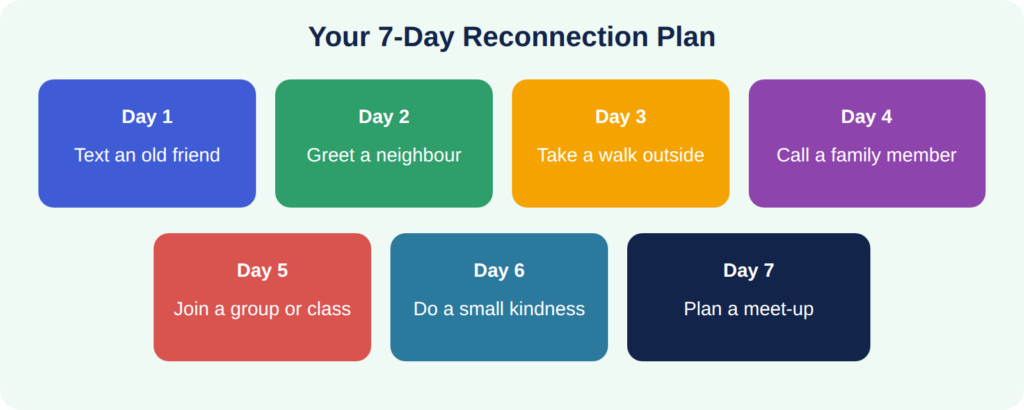
A Simple 7-Day Reconnection Plan
| Day | Small Action |
|---|---|
| Day 1 | Send a message to an old friend or relative |
| Day 2 | Greet a neighbour or chat with a shopkeeper |
| Day 3 | Take a 20-minute walk somewhere with people around |
| Day 4 | Have a proper phone or video call with family |
| Day 5 | Find one local group, class or event to try |
| Day 6 | Do a small kindness, such as sending a thoughtful note |
| Day 7 | Plan a meet-up for the coming week |
Tips for Different Age Groups
For Students
Join clubs, study groups or campus events in your first weeks. Don’t wait for friendship to happen by itself. Most new students are hoping someone will make the first move.
For Working Professionals
Schedule a lunch or coffee with a colleague, join an office interest group, or use co-working spaces if you work from home. Protect at least one evening a week for friends or family.
For Parents and Caregivers
Look for parent groups, community classes or other caregivers. Even a short chat with another parent at school pickup can lift your mood.
For Senior Citizens
Morning walk groups, senior clubs, temples or community centres, and regular video calls with grandchildren can keep social life active. Families can help by arranging regular visits and teaching seniors how to use video calling.
How Families and Friends Can Help
- Check in regularly, without waiting for a crisis.
- Listen without rushing to fix. Sometimes company matters more than advice.
- Invite, and keep inviting. Lonely people may decline at first because they feel a burden.
- Help with practical barriers such as transport or technology.
- Avoid shaming statements such as “You just need to go out more”.
Social Media and Loneliness: Friend or Foe?
Technology isn’t all bad. Video calls keep families close across cities and countries, and online communities help people with rare interests or conditions find support. The key is how you use it. Active use, like messaging, commenting and arranging meetings, tends to support connection. Passive use, like endlessly scrolling and comparing, tends to leave people feeling worse. Try setting limits, and replace late-night scrolling with a call or a book.
Myths and Facts
| Myth | Fact |
|---|---|
| Only older people get lonely | Young adults often report high levels of loneliness too. |
| Lonely people are just shy or unlikeable | Loneliness can affect anyone, including popular and outgoing people. |
| More friends on social media means less loneliness | Quality of connection matters more than numbers. |
| Being alone is always bad | Chosen solitude can be healthy and restorative. |
| You should just snap out of it | Loneliness is a real, common human experience that deserves support. |
When to Seek Professional Help
Quick Action Checklist
- Notice your feelings without judging yourself.
- Make one small connection today.
- Join one activity or group this month.
- Limit passive scrolling and increase real conversations.
- Get outdoors and move your body.
- Reach out for professional help if things feel heavy.
Final Thoughts
The loneliness epidemic can feel overwhelming, but there is real hope. Loneliness is a signal, not a life sentence, and it is something that millions of people quietly share. Small steps, taken consistently, can rebuild a sense of belonging: a message today, a walk tomorrow, a class next week.
If you are feeling lonely, be kind to yourself. If you know someone who might be, reach out to them today. A single conversation can change more than you think.
Frequently Asked Questions (FAQs)
1. What is the loneliness epidemic?
It is a term for the widespread and growing experience of loneliness and social isolation, which health experts now treat as a public health concern.
2. What is the difference between loneliness and being alone?
Being alone is a physical state, and many people enjoy it. Loneliness is a painful feeling that you lack meaningful connection, and it can occur even in a crowd.
3. Can loneliness cause depression?
Long-lasting loneliness is linked with a higher risk of depression, and depression can also make people withdraw and feel lonelier. The two often reinforce each other.
4. Is loneliness bad for physical health?
Research links long-term loneliness with higher risk of heart problems, poor sleep and other issues. It is one factor among many, but strong social ties are protective.
5. Why do young people feel so lonely?
Big life changes, moving away, academic and career pressure, and heavy social media comparison can all play a role.
6. How can I make friends as an adult?
Join regular activities, such as classes, sports, volunteering or hobby groups, where you meet the same people repeatedly. Friendships usually grow through repeated, relaxed contact.
7. Does social media increase loneliness?
It depends on how it is used. Passive scrolling and comparison may increase loneliness, while active, meaningful communication can support connection.
8. How can I help an older family member who feels lonely?
Call or visit regularly, involve them in family plans, help them join community groups and teach them video calling so they can stay in touch.
9. Can pets help with loneliness?
Many people find pets comforting and a source of routine and social contact. They can help, but should complement human relationships rather than replace them.
10. When should I see a professional about loneliness?
If your loneliness lasts for weeks, affects your sleep, mood, work or relationships, or comes with feelings of hopelessness, speak to a doctor or mental health professional.
Disclaimer: This article is for general information and education only and is not medical or psychological advice. If you are struggling, please consult a qualified healthcare or mental health professional.

Hi, I’m Amrita Pandey. I specialize in writing about health, pregnancy, yoga, natural remedies, beverages, fruits, and vegetables. I enjoy creating clear, well-researched content that helps readers make informed decisions and build healthier everyday habits.