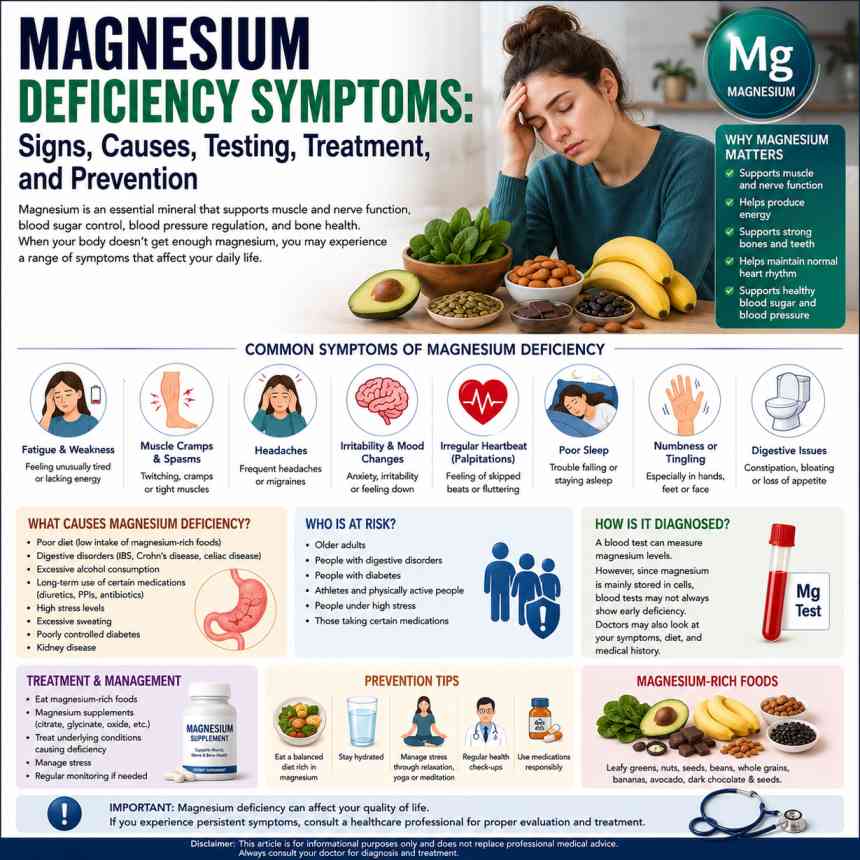
Magnesium is an essential mineral involved in hundreds of processes throughout the body. It helps support normal muscle and nerve function, energy production, blood glucose regulation, blood pressure regulation, bone health, and DNA and protein production.
A mild reduction in magnesium intake may not cause noticeable symptoms. In healthy people, the kidneys can reduce magnesium loss in urine when intake is low. However, prolonged inadequate intake, problems with absorption, certain medical conditions, alcohol dependence, or some medications can lead to clinically significant magnesium deficiency.
Early symptoms can include loss of appetite, nausea, vomiting, fatigue, and weakness. As deficiency becomes more severe, symptoms can include numbness or tingling, muscle cramps or spasms, tremors, seizures, personality changes, and abnormal heart rhythms.
Quick Answer: What Are the Symptoms of Magnesium Deficiency?
Magnesium deficiency may cause no obvious symptoms when it is mild. When symptoms develop, common signs can include:
- Loss of appetite
- Nausea or vomiting
- Fatigue
- Weakness
- Muscle cramps or spasms
- Muscle twitching or tremors
- Numbness or tingling
- Changes in mood or personality
- Abnormal heart rhythms in severe cases
- Seizures in severe deficiency
These symptoms are not specific to magnesium deficiency. Similar symptoms can occur with dehydration, other electrolyte abnormalities, nutritional deficiencies, medications, and many medical conditions.
What Is Magnesium Deficiency?
Magnesium deficiency means the body does not have enough magnesium to support normal physiological functions.
Magnesium is found throughout the body, with substantial amounts stored in bones and tissues. Only a small proportion circulates in the blood. It acts as an electrolyte and is involved in normal nerve and muscle function, bone formation, and numerous enzyme reactions.
The medical term hypomagnesemia generally refers to an abnormally low concentration of magnesium in the blood. However, blood magnesium does not necessarily reflect the body’s total magnesium stores perfectly because most magnesium is not circulating in the bloodstream.
This distinction is important: having a low dietary intake does not automatically mean someone has clinically significant magnesium deficiency.
Common Symptoms of Magnesium Deficiency
1. Fatigue and Weakness
Fatigue and weakness are among the recognized symptoms of magnesium deficiency.
A person may feel unusually tired or notice reduced physical strength. However, fatigue is extremely common and can result from sleep problems, anemia, thyroid disorders, infections, stress, inadequate calorie intake, medications, and other causes.
Persistent fatigue should therefore not automatically be attributed to magnesium deficiency.
2. Muscle Cramps and Spasms
As magnesium deficiency becomes more significant, muscle symptoms can occur.
These may include:
- Muscle cramps
- Muscle spasms
- Twitching
- Tremors
- Increased muscle excitability
Severe hypomagnesemia can be associated with neuromuscular irritability and tetany. Other electrolyte abnormalities, particularly low calcium or potassium, may occur at the same time and can contribute to neurological and muscular symptoms.
3. Numbness and Tingling
More severe magnesium deficiency may cause numbness or tingling sensations.
These sensations can occur in areas such as the hands, feet, or other parts of the body. However, numbness and tingling have many possible causes, including nerve disorders, vitamin deficiencies, diabetes, medication effects, and circulation problems.
New, persistent, or worsening neurological symptoms should be medically evaluated.
4. Nausea, Vomiting, and Loss of Appetite
Early symptoms can include:
- Reduced appetite
- Nausea
- Vomiting
These symptoms may also contribute to a cycle in which someone consumes less food and therefore gets less magnesium.
Persistent vomiting or diarrhea can also increase the risk of magnesium depletion because the body may lose more magnesium through the gastrointestinal tract.
5. Tremors and Muscle Twitching
Low magnesium levels can increase neuromuscular excitability.
Some people with clinically significant hypomagnesemia may develop tremors, muscle fasciculations, or other involuntary muscle movements.
6. Changes in Mood or Personality
Severe magnesium deficiency can affect the nervous system and has been associated with personality changes and other neurological manifestations.
This is not the same as saying that ordinary anxiety, irritability, or low mood automatically indicates magnesium deficiency. Mental and emotional symptoms have many potential causes.
7. Abnormal Heart Rhythm
Severe magnesium deficiency can affect normal electrical activity in the heart and may contribute to abnormal heart rhythms.
This is one reason clinically significant hypomagnesemia should not be self-treated with large doses of supplements without appropriate evaluation.
8. Seizures in Severe Deficiency
Seizures are an uncommon but serious manifestation of severe hypomagnesemia.
If someone experiences a seizure, severe confusion, fainting, significant weakness, or symptoms suggesting a serious heart rhythm problem, urgent medical evaluation is appropriate.
Why Does Magnesium Deficiency Happen?
Magnesium deficiency can result from inadequate intake, poor absorption, excessive loss from the body, or a combination of these factors.
Inadequate Magnesium Intake
A diet consistently low in magnesium-rich foods can contribute to inadequate magnesium intake.
Foods that provide magnesium include:
- Nuts
- Seeds
- Legumes
- Whole grains
- Leafy green vegetables
- Some fruits
- Certain fortified foods
A varied diet generally provides magnesium through multiple food sources.
Gastrointestinal Conditions
Certain digestive conditions can interfere with magnesium absorption.
Examples include:
- Crohn’s disease
- Celiac disease
- Conditions causing chronic diarrhea
- Disorders associated with fat malabsorption
- Some intestinal surgeries
Long-lasting diarrhea can also increase magnesium losses.
Excessive Alcohol Consumption
Long-term heavy alcohol consumption is associated with magnesium deficiency.
It can contribute through a combination of inadequate dietary intake, gastrointestinal problems, and increased urinary losses.
Certain Medications
Some medicines can affect magnesium levels.
Examples include certain:
- Diuretics
- Proton pump inhibitors
- Antibiotics
- Chemotherapy medicines
- Other medications that increase magnesium loss or interfere with absorption
The risk depends on the medication, dose, duration of use, and individual health factors. Do not stop a prescribed medicine because you suspect it is affecting magnesium levels. Discuss concerns with a healthcare professional instead.
Diabetes and Increased Urinary Loss
Certain people with diabetes, particularly when blood glucose is poorly controlled, may have an increased risk of magnesium depletion.
Kidney-Related Problems
The kidneys play an important role in maintaining magnesium balance.
Some kidney-related or hormonal conditions can alter how much magnesium is retained or lost. The underlying condition therefore needs to be considered rather than treating magnesium levels in isolation.
Who Is More Likely to Develop Magnesium Deficiency?
Some groups have a higher risk of magnesium inadequacy or clinically significant deficiency.
These include:
- Older adults
- People with gastrointestinal disorders
- People with type 2 diabetes
- People with long-term heavy alcohol consumption
- People with prolonged diarrhea
- People taking certain medications
- People with conditions that interfere with nutrient absorption
- People with inadequate dietary intake
Risk does not mean that deficiency is definitely present. A healthcare professional may consider the person’s medical history, symptoms, diet, medications, and laboratory findings together.
How Is Magnesium Deficiency Diagnosed?
Magnesium deficiency cannot be reliably diagnosed from symptoms alone.
When hypomagnesemia is suspected, a healthcare professional may order a blood magnesium test. The result is interpreted together with the person’s symptoms, medical history, medications, and other laboratory findings.
Other blood tests may also be considered because low magnesium can occur alongside:
- Low potassium
- Low calcium
- Other electrolyte abnormalities
Doctors may also investigate why magnesium is low, especially when the deficiency is persistent or unexplained.
Can a Normal Blood Magnesium Level Completely Rule Out Magnesium Problems?
Not necessarily.
Most magnesium is stored outside the bloodstream, so serum magnesium does not perfectly represent total body magnesium stores. Clinical context therefore matters when interpreting a result.
This is another reason not to diagnose magnesium deficiency based on symptoms or a single internet checklist.
What Is a Normal Magnesium Level?
Laboratories may use slightly different reference ranges.
Merck Manual describes hypomagnesemia as a serum magnesium concentration below 1.8 mg/dL (0.70 mmol/L), while severe deficiency is generally associated with substantially lower concentrations.
However, laboratory reference ranges and clinical interpretation can vary.
A test result should therefore be interpreted using the reference range provided by the laboratory and the person’s overall clinical situation.
Magnesium Deficiency Treatment and Management
Treatment depends on how low the magnesium level is, whether symptoms are present, the underlying cause, kidney function, and whether other electrolyte abnormalities are present.
Dietary Changes
For people whose magnesium intake is inadequate, increasing magnesium-rich foods may be an important part of maintaining adequate intake.
Useful sources include:
- Pumpkin seeds
- Chia seeds
- Almonds
- Cashews
- Peanuts
- Beans
- Lentils
- Whole grains
- Spinach and other leafy greens
- Some fortified foods
Food-first approaches are generally preferable for meeting nutritional needs when medically appropriate.
Magnesium Supplements
Magnesium supplements are available in several forms, including magnesium citrate, chloride, lactate, and aspartate. Different forms can differ in absorption and gastrointestinal effects.
Supplementation should not automatically be considered necessary just because someone has fatigue or muscle cramps.
If a deficiency is confirmed, a healthcare professional can determine whether supplementation is appropriate and which dose and form are suitable.
Medical Treatment for Significant Deficiency
People with symptomatic or severe hypomagnesemia may require medical magnesium replacement.
Oral magnesium may be used in less severe situations, while severe deficiency or serious symptoms may require magnesium administered intravenously or intramuscularly under medical supervision.
Treatment may also need to address associated low potassium or calcium levels and the underlying cause of the deficiency.
Can Too Much Magnesium Be Harmful?
Yes.
Magnesium obtained naturally from food is generally not a concern for healthy people, but high amounts from supplements or medications can cause side effects.
Common problems from excessive supplemental magnesium include:
- Diarrhea
- Nausea
- Abdominal cramping
Very high magnesium levels can be dangerous, particularly in people with impaired kidney function, and may cause low blood pressure, breathing problems, abnormal heart function, or cardiac arrest in extreme cases.
This is why taking very large doses of magnesium without medical guidance is not recommended.
Magnesium-Rich Foods
A balanced diet can provide magnesium from many different food groups.
Nuts and Seeds
- Almonds
- Cashews
- Peanuts
- Pumpkin seeds
- Chia seeds
Beans and Legumes
- Black beans
- Lentils
- Chickpeas
- Other legumes
Whole Grains
- Whole-wheat products
- Oats
- Brown rice
- Other minimally refined grains
Vegetables
Leafy green vegetables such as spinach can provide magnesium.
Other Foods
Depending on the food and preparation method, magnesium can also be found in:
- Avocado
- Some dairy products
- Certain fortified foods
- Dark chocolate
Eating a variety of these foods can help improve overall nutrient intake rather than relying on a single “best” magnesium food.
How Can You Help Prevent Magnesium Deficiency?
For most people, prevention begins with a varied, nutrient-dense diet.
1. Eat a Variety of Magnesium-Rich Foods
Include nuts, seeds, legumes, whole grains, and leafy green vegetables regularly.
2. Manage Digestive Conditions
If you have persistent diarrhea, malabsorption, or another gastrointestinal condition, proper medical management can help reduce the risk of nutrient deficiencies.
3. Review Long-Term Medications
If you take medications that may affect magnesium levels, ask your healthcare professional whether monitoring is appropriate.
Do not stop prescription medication without medical advice.
4. Address Heavy Alcohol Consumption
Long-term heavy alcohol consumption can increase the risk of magnesium deficiency. Addressing alcohol-related health risks can therefore be an important part of nutritional and overall health management.
5. Avoid Unnecessary High-Dose Supplements
More magnesium does not necessarily mean better health.
Use supplements when they are appropriate for your individual needs rather than taking high doses based on symptoms alone.
When Should You Speak With a Healthcare Professional?
Consider seeking medical advice if you have persistent:
- Muscle cramps or spasms
- Weakness
- Fatigue
- Numbness or tingling
- Nausea or vomiting
- Unexplained appetite loss
- Tremors
- Symptoms that started after beginning a new medication
Medical evaluation is particularly important if you have a gastrointestinal disorder, diabetes, kidney disease, prolonged diarrhea, or another condition that could affect magnesium balance.
Seek urgent medical care for severe symptoms such as seizures, fainting, significant confusion, severe weakness, or symptoms that could indicate a serious heart rhythm problem.
Magnesium Deficiency vs. Low Magnesium Intake
These terms should not be treated as identical.
Someone may consume less magnesium than recommended without having clinically significant magnesium deficiency. The body has mechanisms that can reduce magnesium losses when intake temporarily falls.
Clinically significant deficiency becomes more likely when inadequate intake is prolonged or when the body is losing magnesium because of disease, gastrointestinal problems, alcohol use, or medications.
This distinction is important because many online articles incorrectly suggest that common symptoms automatically prove a magnesium deficiency.
Frequently Asked Questions About Magnesium Deficiency
What are the first signs of magnesium deficiency?
Early symptoms can include loss of appetite, nausea, vomiting, fatigue, and weakness. Mild deficiency may cause no obvious symptoms.
Can magnesium deficiency cause muscle cramps?
Yes. Muscle cramps, spasms, twitching, and increased neuromuscular excitability can occur with significant magnesium deficiency. However, muscle cramps have many other possible causes.
Can low magnesium cause fatigue?
Fatigue and weakness are recognized symptoms of magnesium deficiency, but fatigue alone cannot establish that magnesium is low. Many other health conditions can cause similar symptoms.
Can magnesium deficiency cause numbness and tingling?
Severe magnesium deficiency can cause numbness and tingling. These symptoms can also occur with other nutritional, neurological, metabolic, and circulatory conditions, so persistent symptoms should be evaluated.
What test checks magnesium levels?
A blood test measuring serum magnesium is commonly used to identify hypomagnesemia. Other tests may be ordered to investigate the cause or identify associated electrolyte abnormalities.
Is magnesium deficiency common in healthy people?
Symptomatic magnesium deficiency caused solely by low dietary intake is uncommon in otherwise healthy people because the kidneys help conserve magnesium. Deficiency becomes more likely with certain medical conditions, medications, prolonged low intake, or excessive losses.
What foods are high in magnesium?
Nuts, seeds, legumes, whole grains, and leafy green vegetables are among the useful dietary sources of magnesium. A varied diet is generally better than relying on one particular food.
Should I take magnesium supplements if I have muscle cramps?
Not necessarily. Muscle cramps have many possible causes. If they are frequent, severe, or persistent, it is better to identify the underlying cause before taking high-dose magnesium supplements.
Can too much magnesium be harmful?
Yes. Excess magnesium from supplements or medications can cause diarrhea, nausea, and abdominal cramping. Extremely high levels can be dangerous, particularly in people with impaired kidney function.
How is severe magnesium deficiency treated?
Depending on severity and symptoms, treatment may involve oral magnesium or magnesium given intravenously or intramuscularly under medical supervision. Associated electrolyte abnormalities and the underlying cause may also need treatment.
Can magnesium deficiency affect the heart?
Severe deficiency can contribute to abnormal heart rhythms. Because potentially serious cardiac effects can occur, significant or symptomatic hypomagnesemia should be medically evaluated rather than treated with unsupervised high-dose supplements.
Key Takeaway
Magnesium deficiency can affect the muscles, nerves, heart, and overall energy levels. Early symptoms may include fatigue, weakness, nausea, vomiting, and loss of appetite, while more severe deficiency can cause muscle spasms, tremors, numbness, seizures, and abnormal heart rhythms.
However, these symptoms are not unique to magnesium deficiency. If symptoms are persistent or significant, the right approach is to evaluate the underlying cause rather than assuming magnesium is the answer.
A healthcare professional can determine whether magnesium testing is appropriate and whether dietary changes, supplementation, or medical treatment is needed.
Medical Disclaimer: This article is intended for general educational purposes and does not replace diagnosis, treatment, or individualised medical advice from a qualified healthcare professional.

Hi, I’m Amrita Pandey. I specialize in writing about health, pregnancy, yoga, natural remedies, beverages, fruits, and vegetables. I enjoy creating clear, well-researched content that helps readers make informed decisions and build healthier everyday habits.