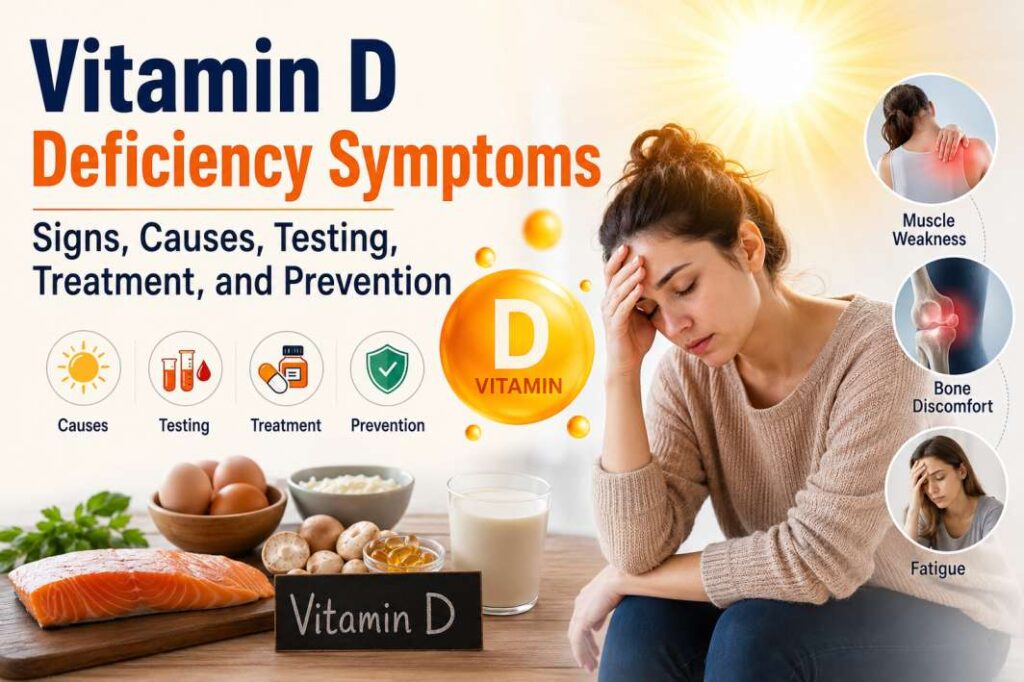
Vitamin D plays an important role in maintaining healthy bones, muscles, and normal calcium levels in the body. When the body does not get enough vitamin D over time, deficiency can develop. However, vitamin D deficiency does not always cause obvious symptoms, and some symptoms that are associated with low vitamin D can also occur with many other health conditions.
Common symptoms and effects can include fatigue, muscle weakness, bone discomfort, and, in more severe or prolonged deficiency, problems with bone mineralization. In children, severe deficiency can cause rickets, while adults may develop osteomalacia.
The only reliable way to determine whether someone has low vitamin D status is through appropriate medical evaluation and, when indicated, a blood test measuring 25-hydroxyvitamin D [25(OH)D]. Routine vitamin D testing is not recommended for every healthy person, so testing decisions should depend on individual circumstances and clinical judgment.
Important: Symptoms alone cannot confirm vitamin D deficiency. If you are concerned about your vitamin D level, speak with a healthcare professional rather than starting high-dose supplements on your own.
Quick Answer: What Are the Symptoms of Vitamin D Deficiency?
Vitamin D deficiency may cause few or no noticeable symptoms, particularly when it is mild. When symptoms or effects do occur, they may include:
- Persistent or unexplained tiredness
- Muscle weakness
- Bone discomfort or pain
- Muscle aches or cramps in some people
- Reduced physical strength
- Increased risk of falls or fractures when deficiency is prolonged and associated with impaired bone health
Severe deficiency can affect bone mineralization. In children, this can result in rickets, while adolescents and adults can develop osteomalacia, which involves defective mineralization of existing bone.
Because these symptoms are not specific to vitamin D deficiency, they should not be used as a diagnosis by themselves.
What Is Vitamin D Deficiency?
Vitamin D is a fat-soluble vitamin that helps the body absorb calcium and maintain appropriate calcium and phosphate levels. These functions are important for normal bone development, maintenance, and remodeling.
The body can obtain vitamin D from:
- Sunlight exposure
- Foods containing vitamin D
- Fortified foods
- Dietary supplements
Vitamin D obtained from sunlight, food, or supplements must undergo metabolic steps in the body before becoming biologically active. The liver converts vitamin D into 25-hydroxyvitamin D [25(OH)D], while further conversion primarily occurs in the kidneys.
This is one reason the 25(OH)D blood test is used when vitamin D status needs to be assessed.
Why Does Vitamin D Matter?
Vitamin D supports calcium absorption and helps maintain the mineral balance required for normal bone mineralization.
When vitamin D deficiency becomes significant or persists for a long time, the consequences can extend beyond simply having a low blood level.
In adults, severe deficiency can contribute to osteomalacia, which can cause bone pain and weakness. In children, deficiency can interfere with normal bone mineralization and cause rickets.
Common Vitamin D Deficiency Symptoms
1. Fatigue and Low Energy
Feeling unusually tired is commonly associated with low vitamin D status, but fatigue is a very nonspecific symptom.
Poor sleep, anemia, thyroid disorders, infections, stress, inadequate nutrition, medications, and many other conditions can also cause tiredness.
Therefore, if fatigue continues for weeks or interferes with daily life, it is better to investigate the underlying cause rather than assuming vitamin D deficiency is responsible.
2. Muscle Weakness
Muscle weakness can occur when vitamin D deficiency becomes clinically significant.
A person might notice that routine physical activities feel more difficult than usual, such as climbing stairs, standing from a chair, or maintaining physical strength.
However, muscle weakness has many possible causes, so it should be evaluated in context.
3. Bone Discomfort or Pain
Vitamin D is closely involved in calcium metabolism and normal bone mineralization.
Significant deficiency can contribute to osteomalacia in adults, which may be associated with bone pain or tenderness and muscle weakness.
Unexplained or persistent bone pain should not automatically be attributed to vitamin D deficiency. Other bone, muscular, neurological, or inflammatory conditions may produce similar symptoms.
4. Muscle Aches or Cramps
Some people with vitamin D deficiency may experience muscle discomfort, weakness, or cramps, particularly when deficiency is associated with disturbances in calcium metabolism.
However, these symptoms are not specific enough to establish a diagnosis.
5. Problems Related to Bone Strength
Long-standing vitamin D deficiency can affect normal bone mineralization.
In adults, severe deficiency may lead to osteomalacia. In children, it may cause rickets, which can lead to soft or poorly mineralized bones and skeletal abnormalities.
In older adults, poor vitamin D status can also occur alongside factors that increase the risk of falls and fractures.
Why Does Vitamin D Deficiency Happen?
Vitamin D deficiency can develop for several different reasons.
Limited Sun Exposure
The skin can produce vitamin D when exposed to ultraviolet B radiation from sunlight. People who spend little time outdoors may therefore have a greater risk of inadequate vitamin D status.
Factors that can reduce sun exposure include:
- Spending most of the day indoors
- Limited outdoor activity
- Clothing that covers most of the skin
- Seasonal changes
- Living conditions that reduce outdoor exposure
Sun exposure should not be treated as a prescription for vitamin D deficiency, because excessive ultraviolet exposure increases skin cancer risk.
Inadequate Dietary Intake
Vitamin D occurs naturally in relatively few foods, and fortified foods can be an important dietary source.
People who avoid foods that commonly provide vitamin D may have a higher risk of inadequate intake. NIH notes that deficiency can occur in people with certain restrictive diets, including some people following vegan or vegetarian diets, depending on their overall dietary pattern.
Problems Absorbing Vitamin D
Some gastrointestinal conditions can interfere with the absorption of fat-soluble vitamins, including vitamin D.
This can occur with certain disorders affecting the digestive system or fat absorption.
Kidney or Liver Problems
Vitamin D has to be metabolized by the body before it becomes active.
Certain kidney or liver conditions can interfere with normal vitamin D metabolism and contribute to deficiency or impaired vitamin D action.
Obesity
People with obesity can have a higher risk of inadequate vitamin D status.
However, having obesity does not automatically mean that a person needs routine vitamin D testing. The 2024 Endocrine Society guideline recommends against routine 25(OH)D screening in generally healthy adults with obesity who do not have another established indication for testing.
Who Is More Likely to Develop Vitamin D Deficiency?
Some groups have a greater likelihood of inadequate vitamin D status.
These can include:
- Older adults
- People with limited sun exposure
- People with dark skin
- People with conditions that reduce fat absorption
- People with obesity
- People who have undergone gastric bypass surgery
- Breastfed infants who do not receive an appropriate source of vitamin D
- People whose diets provide little vitamin D
These are risk factors, not proof that someone has a deficiency.
Vitamin D and Skin Pigmentation
Skin pigmentation can influence how much vitamin D the skin produces in response to UVB exposure. However, vitamin D status is influenced by many factors, and skin pigmentation should not be treated as a standalone diagnostic factor.
The 2024 Endocrine Society guideline specifically advises against routine 25(OH)D screening in generally healthy adults with dark complexion who do not otherwise have an established indication for testing.
How Is Vitamin D Deficiency Diagnosed?
Symptoms alone cannot confirm vitamin D deficiency.
When testing is clinically appropriate, the main blood marker used to evaluate vitamin D status is serum 25-hydroxyvitamin D [25(OH)D].
A healthcare professional may consider:
- Your symptoms
- Medical history
- Diet
- Sun exposure
- Medications
- Existing health conditions
- Risk factors
- Physical examination
- Appropriate laboratory testing
What Is a Normal Vitamin D Level?
This is an area where oversimplification can be misleading.
The NIH Office of Dietary Supplements notes that the National Academies consider serum 25(OH)D concentrations of 20 ng/mL (50 nmol/L) or higher sufficient for most people, while levels below 12 ng/mL (30 nmol/L) are associated with increased risk of deficiency. However, interpretation is not simply a matter of applying one number to every individual, and laboratory assays can vary.
The 2024 Endocrine Society guideline also notes that specific 25(OH)D thresholds for disease-prevention benefits have not been established and recommends against routine testing in generally healthy populations without an established indication.
Bottom line: A vitamin D test result should be interpreted alongside the person’s health status and reason for testing rather than using an isolated number as a diagnosis.
When Should You Speak With a Healthcare Professional?
Consider discussing persistent or unexplained symptoms with a healthcare professional if you have:
- Ongoing fatigue
- Persistent muscle weakness
- Unexplained bone pain
- Recurrent muscle symptoms
- A known condition that affects nutrient absorption
- A history of gastric bypass surgery
- Other risk factors for vitamin D deficiency
- Symptoms suggesting a significant bone or mineral problem
You should also seek medical advice if symptoms are severe, rapidly worsening, or interfering significantly with normal activities.
Remember that fatigue, weakness, aches, and pain can have many causes. Testing for vitamin D may or may not be appropriate depending on the circumstances.
Vitamin D Deficiency Treatment and Management
Treatment depends on the severity and cause of deficiency.
A healthcare professional may recommend:
- Improving dietary vitamin D intake
- Using vitamin D-fortified foods
- Appropriate vitamin D supplementation
- Addressing an underlying absorption or metabolic problem
- Monitoring treatment when clinically appropriate
For confirmed deficiency, treatment doses can be different from routine dietary intake. Therefore, people should not automatically take large doses of vitamin D simply because they feel tired or have muscle aches.
The NHS notes that treatment for severe deficiency can involve a higher initial dose followed by longer-term maintenance, but the specific regimen should be determined by a healthcare professional.
Can You Take Vitamin D Every Day?
Vitamin D supplementation is not one-size-fits-all.
The 2024 Endocrine Society guideline recommends that generally healthy adults under 75 follow established dietary reference intakes rather than routinely taking vitamin D above those levels for disease prevention. It also recommends against routine 25(OH)D testing in these generally healthy groups without an established indication.
People with a diagnosed deficiency or specific medical risk factors may have different requirements.
Can Too Much Vitamin D Be Harmful?
Yes.
Vitamin D is fat-soluble, so excessive supplementation can lead to excessively high vitamin D levels and potentially harmful effects.
The NIH notes that serum 25(OH)D concentrations above 125 nmol/L (50 ng/mL) can be associated with adverse effects, although interpretation depends on the clinical context.
Very high vitamin D intake can increase calcium levels in the blood and may cause problems such as nausea, weakness, confusion, excessive thirst, frequent urination, and kidney-related complications.
For this reason:
More vitamin D is not automatically better.
High-dose supplements should be used only when medically appropriate.
How Can You Help Prevent Vitamin D Deficiency?
Prevention depends on your age, diet, health conditions, lifestyle, and individual risk.
Helpful approaches can include:
Eat Vitamin D Sources
Depending on your diet, vitamin D can come from foods such as:
- Fatty fish
- Egg yolks
- Fortified milk or dairy alternatives
- Fortified cereals
- Other fortified foods
The exact amount obtained from food varies considerably.
Maintain Appropriate Outdoor Activity
Sunlight contributes to vitamin D production, but intentional prolonged sun exposure is not recommended as a substitute for safe skin protection.
Discuss Supplements When Appropriate
People at increased risk may benefit from supplementation, but the correct dose depends on the individual.
Do not use very high-dose vitamin D products without medical guidance.
Address Underlying Conditions
If a digestive, liver, kidney, or other medical condition is affecting vitamin D metabolism or absorption, treating the underlying issue may be an important part of management.
Vitamin D Deficiency vs. Vitamin D Insufficiency
These terms are sometimes used interchangeably online, but they are not always defined consistently.
Different organizations and laboratories may use different thresholds and terminology.
The NIH notes that the evidence does not establish one universally applicable blood concentration that perfectly defines vitamin D deficiency, adequacy, and overall health for every purpose.
This is why an article should avoid statements such as:
“If your vitamin D is exactly X, you definitely have a deficiency.”
A better approach is to explain the laboratory result in context.
Related Vitamin D Topics
If you are researching vitamin D, the following topics may also be useful:
- Vitamin D foods and dietary sources
- Vitamin D2 vs. vitamin D3
- Vitamin D supplements
- Vitamin D and calcium
- Vitamin D blood testing
- Vitamin D deficiency in children
- Vitamin D and bone health
- Vitamin D requirements by age
- Vitamin D during pregnancy
- Vitamin D and older adults
These topics are also useful for building a comprehensive vitamin D content cluster rather than treating every keyword as a completely separate subject.
Frequently Asked Questions About Vitamin D Deficiency
Can vitamin D deficiency cause tiredness?
It can be associated with tiredness, but fatigue is not specific to vitamin D deficiency. Many other conditions can cause fatigue, so persistent tiredness should not automatically be blamed on low vitamin D.
What does vitamin D deficiency feel like?
Some people have no obvious symptoms. When symptoms or effects occur, they may include fatigue, muscle weakness, muscle discomfort, or bone discomfort. Significant deficiency can affect bone mineralization.
How do I know if I have vitamin D deficiency?
Symptoms alone cannot tell you. When testing is appropriate, a blood test measuring serum 25-hydroxyvitamin D [25(OH)D] is the primary indicator used to assess vitamin D status.
What test is used for vitamin D deficiency?
The main test is a blood test measuring 25-hydroxyvitamin D [25(OH)D]. The active form, 1,25-dihydroxyvitamin D, is generally not used as the routine indicator of vitamin D status.
Can vitamin D deficiency cause muscle weakness?
Significant vitamin D deficiency can be associated with muscle weakness. However, weakness has many possible causes and should be evaluated rather than automatically attributed to vitamin D.
Can vitamin D deficiency affect bones?
Yes. Vitamin D supports calcium absorption and normal bone mineralization. Severe deficiency can lead to osteomalacia in adults and rickets in children.
Should everyone get a vitamin D test?
No. The 2024 Endocrine Society guideline recommends against routine 25(OH)D testing in generally healthy populations without an established indication. Testing decisions should be based on individual circumstances.
Should I take a high-dose vitamin D supplement if I have symptoms?
Not without appropriate medical advice. Symptoms such as fatigue and muscle aches can have many causes, and excessive vitamin D intake can be harmful.
How long does it take to correct vitamin D deficiency?
It varies according to the severity of deficiency, the underlying cause, the treatment used, and the individual’s health. Severe deficiency may require an initial treatment regimen followed by maintenance therapy.
Can vitamin D deficiency be prevented?
In many cases, adequate dietary intake, appropriate supplementation when indicated, and addressing risk factors can help maintain adequate vitamin D status. Individual requirements vary.
Key Takeaway
Vitamin D deficiency can affect the bones, muscles, and calcium balance in the body. Commonly discussed symptoms include fatigue, muscle weakness, and bone discomfort, but these symptoms are not specific enough to diagnose deficiency on their own.
If vitamin D deficiency is suspected, the appropriate approach is to consider the person’s symptoms and risk factors and, when medically indicated, evaluate 25-hydroxyvitamin D [25(OH)D] through a blood test.
Most importantly, avoid the assumption that taking increasingly large amounts of vitamin D will automatically provide greater health benefits. Current clinical guidance emphasizes individualized use of supplementation and does not recommend routine vitamin D testing for every healthy person.
Medical disclaimer: This article is for general educational purposes and is not a substitute for diagnosis, treatment, or personalized medical advice from a qualified healthcare professional.
Sources used: NIH Office of Dietary Supplements, Endocrine Society 2024 clinical practice guideline, and NHS medication guidance.

Hi, I’m Amrita Pandey. I specialize in writing about health, pregnancy, yoga, natural remedies, beverages, fruits, and vegetables. I enjoy creating clear, well-researched content that helps readers make informed decisions and build healthier everyday habits.