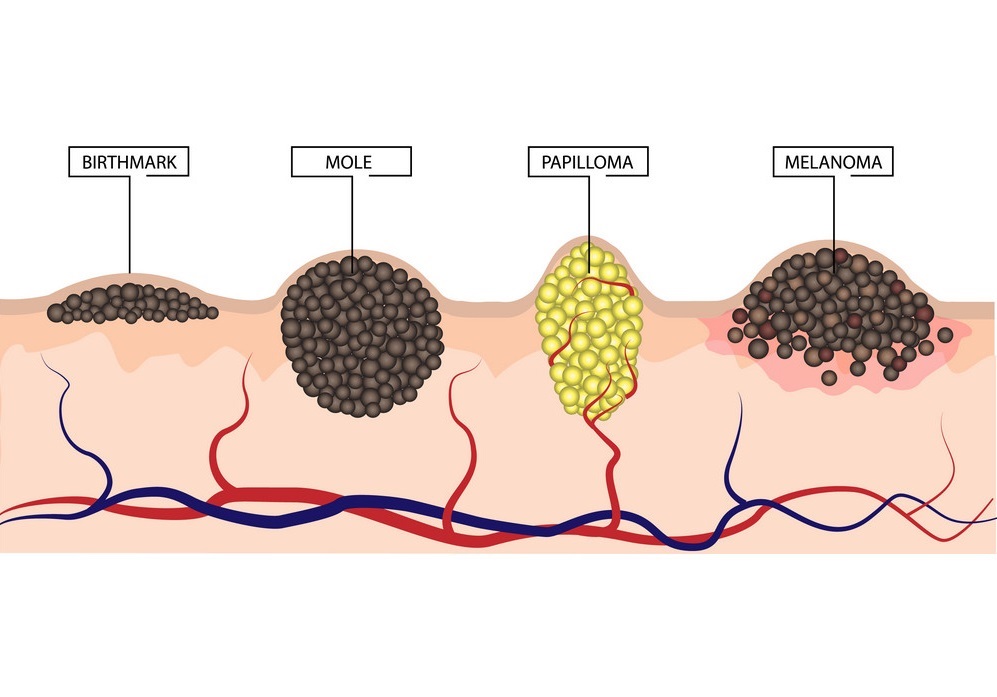
Skin cancer is one of the most common types of cancer worldwide. Early detection plays a crucial role in successful treatment outcomes. Knowing the warning signs of skin cancer can help you identify suspicious changes in your skin and seek medical attention promptly.
While not every skin change is cancerous, persistent or unusual changes should never be ignored.
What Is Skin Cancer?
Skin cancer occurs when abnormal skin cells grow uncontrollably. It most commonly develops in areas exposed to ultraviolet (UV) radiation from the sun or tanning beds, but it can also occur on skin that receives little sun exposure.
The three most common types of skin cancer include:
- Basal Cell Carcinoma (BCC)
- Squamous Cell Carcinoma (SCC)
- Melanoma
Among these, melanoma is the most aggressive form and requires immediate medical evaluation.
Common Early Signs of Skin Cancer
1. A New Spot or Growth on the Skin
One of the earliest signs of skin cancer is the appearance of a new mole, bump, patch, or spot that was not previously present.
Pay attention to any growth that:
- Continues to enlarge
- Changes color
- Looks different from surrounding skin
- Persists for several weeks
2. A Sore That Does Not Heal
A sore, scab, or wound that fails to heal within several weeks may indicate skin cancer.
Warning signs include:
- Repeated bleeding
- Crusting
- Oozing
- Persistent tenderness
3. Changes in an Existing Mole
Changes in moles are among the most important warning signs of melanoma.
Dermatologists often recommend using the ABCDE rule:
A – Asymmetry
One half of the mole does not match the other.
B – Border
The edges become irregular, blurred, or jagged.
C – Color
The mole develops multiple colors or changes in shade.
D – Diameter
The mole becomes larger than approximately 6 mm.
E – Evolving
The mole changes in size, shape, color, or texture over time.
4. Persistent Red or Scaly Patches
A rough, red, or scaly patch that does not improve may be an early sign of certain non-melanoma skin cancers.
These patches may:
- Itch occasionally
- Feel tender
- Become crusty
- Slowly enlarge over time
5. A Pearly or Shiny Bump
Basal cell carcinoma often appears as:
- A flesh-colored bump
- A pearly or shiny growth
- A translucent nodule
- A lesion with visible blood vessels
6. Dark Streaks or Pigmentation Changes
Unexpected dark patches, discoloration, or streaks under fingernails or toenails should be evaluated by a dermatologist, especially if they continue to grow.
7. Itching, Pain, or Tenderness in a Mole
While many moles remain harmless, itching, tenderness, burning, or pain associated with a mole should be assessed by a healthcare professional.
Risk Factors for Skin Cancer
Several factors increase the risk of skin cancer:
- Excessive sun exposure
- Frequent sunburns
- Tanning bed use
- Fair skin
- Family history of skin cancer
- Large number of moles
- Weakened immune system
- Increasing age
How to Check Your Skin at Home
Perform a monthly skin self-examination and look for:
- New moles or growths
- Changes in existing moles
- Non-healing sores
- Unusual pigmentation
- Persistent redness or scaling
Use mirrors to examine difficult-to-see areas such as the scalp, back, and behind the ears.
When Should You See a Dermatologist?
Schedule a skin examination if you notice:
- A mole that changes in appearance
- A spot that bleeds or crusts
- A sore that does not heal
- Persistent itching or pain
- New growths that continue to enlarge
Early diagnosis significantly improves treatment success.
Tips to Help Prevent Skin Cancer
- Apply broad-spectrum sunscreen daily.
- Wear protective clothing and hats.
- Avoid excessive sun exposure between peak UV hours.
- Stay away from tanning beds.
- Perform regular skin self-checks.
- Schedule routine skin examinations if you are at high risk.
Expert Note
Not every skin change indicates cancer, but any unusual or persistent skin lesion should be evaluated by a qualified dermatologist. Early detection remains one of the most effective ways to improve skin cancer treatment outcomes.
Medical Disclaimer
This article is intended for educational purposes only and should not replace professional medical advice, diagnosis, or treatment. Consult a qualified healthcare professional regarding any concerns about skin cancer or suspicious skin changes.
FAQs
1. What are the first signs of skin cancer?
Early signs may include a new skin growth, a mole that changes in appearance, a non-healing sore, persistent red patches, or unusual pigmentation.
2. How can I tell if a mole is cancerous?
Use the ABCDE rule: Asymmetry, Border irregularity, Color variation, Diameter larger than 6 mm, and Evolving changes over time.
3. Is itching a sign of skin cancer?
Some skin cancers may cause itching, but itching alone does not necessarily indicate cancer. Persistent or changing skin lesions should be evaluated by a dermatologist.
4. Can skin cancer appear without sun exposure?
Yes. Although sun exposure is a major risk factor, skin cancer can develop on areas that receive little or no sunlight.
5. What does melanoma look like?
Melanoma often appears as an unusual mole with irregular borders, multiple colors, asymmetry, or changes in size and shape.
6. Is skin cancer curable if detected early?
Many forms of skin cancer are highly treatable when diagnosed and treated early.
7. How often should I check my skin for skin cancer?
Dermatologists commonly recommend performing a full-body skin self-exam once per month.
8. Are all skin spots cancerous?
No. Most skin spots, freckles, and moles are harmless. However, any changing or suspicious lesion should be examined by a healthcare professional.
9. What are the major risk factors for skin cancer?
Excessive UV exposure, fair skin, family history, tanning bed use, multiple moles, and a weakened immune system are common risk factors.
10. When should I see a doctor about a skin lesion?
Consult a dermatologist if a spot changes in appearance, bleeds, becomes painful, does not heal, or continues growing.

Hi, I’m Amrita Pandey. I specialize in writing about health, pregnancy, yoga, natural remedies, beverages, fruits, and vegetables. I enjoy creating clear, well-researched content that helps readers make informed decisions and build healthier everyday habits.