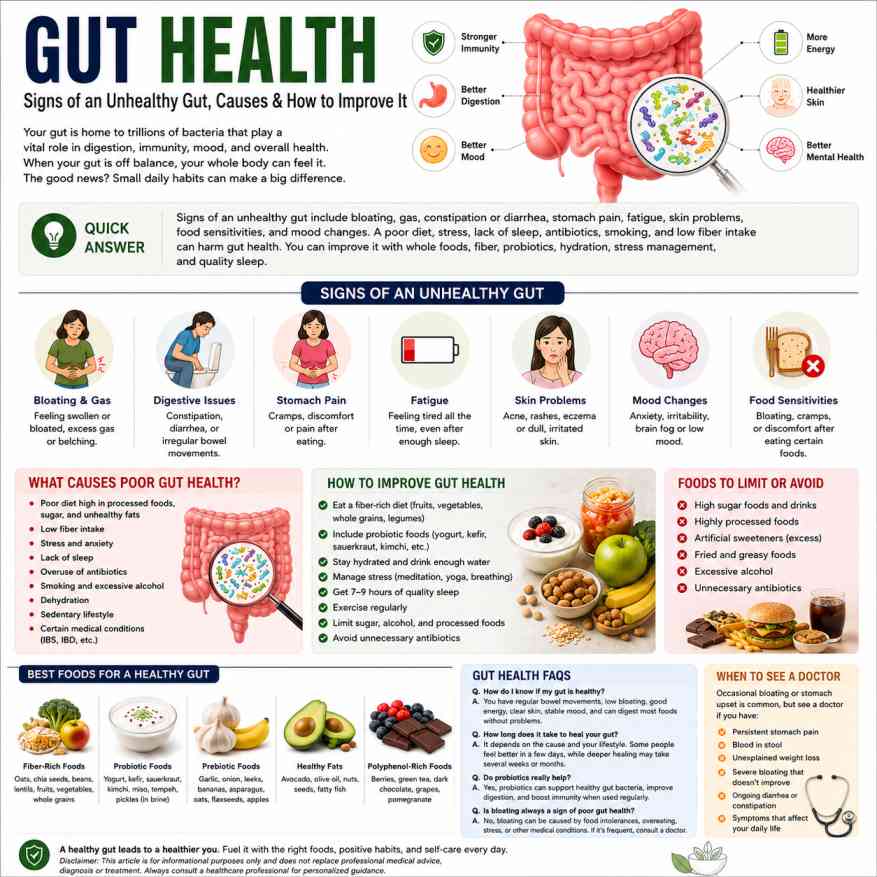
Your digestive system does much more than break down food. The gastrointestinal tract is home to a complex community of microorganisms, often called the gut microbiome, that interacts with the digestive system and the rest of the body. Researchers are studying how these microorganisms influence digestion, metabolism, immune function, and other aspects of health.
But “gut health” is not a single medical diagnosis, and there is no simple checklist or home test that can tell you whether your gut is perfectly healthy. Instead, digestive symptoms, bowel habits, diet, medications, lifestyle, and underlying health conditions all provide useful context.
Common digestive complaints such as bloating, constipation, diarrhea, abdominal discomfort, and changes in bowel habits can have many different causes. Some are temporary, while persistent or severe symptoms may need medical evaluation.
The good news is that several everyday habits can support digestive health. Eating enough fiber, drinking adequate fluids, staying physically active, getting sufficient sleep, and eating a varied diet are practical places to start.
Quick Answer: What Are the Signs of an Unhealthy Gut?
There is no single symptom that proves your gut is “unhealthy.” However, persistent digestive problems may indicate that something needs attention.
Possible signs include:
- Frequent bloating or excessive gas
- Constipation
- Frequent or persistent diarrhea
- Changes in normal bowel habits
- Abdominal discomfort or pain
- Feeling overly full after eating
- Food-related digestive symptoms
- Nausea or changes in appetite
These symptoms can result from many conditions, including dietary changes, infections, medication effects, food intolerances, irritable bowel syndrome (IBS), inflammatory bowel disease (IBD), and other digestive disorders.
Important: Symptoms such as fatigue, acne, anxiety, or mood changes are sometimes promoted online as direct signs of poor gut health. However, they are nonspecific and can have many causes. They should not be used alone to diagnose a gut problem.
What Is Gut Health?
“Gut health” is a broad term used to describe the condition and functioning of the gastrointestinal system and its interaction with the microorganisms living in the digestive tract.
Your gastrointestinal tract includes organs such as the:
- Mouth
- Esophagus
- Stomach
- Small intestine
- Large intestine
- Rectum
The digestive system helps break down food, absorb nutrients, and remove waste.
Alongside these functions, the gastrointestinal tract contains a large and diverse community of microorganisms. The gut microbiome includes bacteria and other microorganisms that interact with food, the intestinal environment, and the body’s biological systems. Researchers continue to investigate how changes in this ecosystem relate to human health and disease.
Gut Health Is More Than Having “Good Bacteria”
A common misconception is that gut health simply means having more “good bacteria.”
The reality is more complicated.
Different microorganisms have different characteristics, and their effects can depend on the species, strain, environment, diet, and individual. This is particularly important when discussing probiotics because different probiotic strains can have different effects.
Therefore, a healthy gut should not be reduced to a simple idea of “good bacteria versus bad bacteria.”
Signs of an Unhealthy Gut
1. Frequent Bloating and Gas
Occasional bloating is common, particularly after eating a large meal or certain foods.
However, frequent or troublesome bloating may be associated with:
- Constipation
- Food intolerances
- Certain carbohydrate-rich foods
- Eating too quickly
- Excessive intake of carbonated drinks
- IBS
- Other digestive conditions
If bloating is persistent, painful, or accompanied by unexplained weight loss, vomiting, bleeding, or significant changes in bowel habits, medical evaluation is appropriate.
2. Constipation
Constipation can involve:
- Fewer bowel movements than usual
- Hard or dry stools
- Difficulty passing stool
- Pain during bowel movements
- Feeling that the bowel has not completely emptied
NIDDK notes that constipation can have multiple causes, including diet, medications, lifestyle factors, and underlying medical conditions.
Increasing dietary fiber, drinking adequate fluids, and staying physically active can help many people manage or prevent constipation. Adults generally need around 22–34 grams of fiber per day, depending on age and sex.
3. Persistent Diarrhea
Diarrhea can occur because of infections, medications, food-related problems, digestive disorders, and other causes.
An occasional episode may resolve on its own, but ongoing diarrhea can lead to dehydration and nutrient losses.
Persistent diarrhea should be discussed with a healthcare professional, particularly when accompanied by:
- Blood in the stool
- Fever
- Severe abdominal pain
- Dehydration
- Unexplained weight loss
- Significant weakness
4. Abdominal Pain or Discomfort
Stomach or abdominal discomfort can have many explanations.
It may occur because of:
- Gas
- Constipation
- Food intolerance
- Infection
- IBS
- Acid-related digestive problems
- Gallbladder or pancreatic conditions
- Other medical conditions
Because abdominal pain is nonspecific, it is not appropriate to assume that it is caused by an “unbalanced microbiome.”
5. Changes in Bowel Habits
Your usual bowel pattern can vary from person to person.
A noticeable and persistent change—such as new constipation, recurrent diarrhea, or a significant change in stool appearance—can be worth discussing with a healthcare professional.
The important factor is often a persistent change from your normal pattern, rather than comparing your bowel habits with someone else’s.
What Causes Poor Gut Health?
There is no single cause of digestive problems. Several factors can influence digestive health.
Diet Low in Fiber
Fiber is found naturally in foods such as:
- Vegetables
- Fruits
- Beans
- Lentils
- Nuts
- Seeds
- Whole grains
Fiber supports normal bowel function and can be fermented by microorganisms in the colon.
Increasing fiber gradually is often better than suddenly making a large change, particularly for people who are prone to bloating.
Highly Processed Diets
A diet heavily dominated by highly processed foods may provide less fiber and less dietary variety than a diet containing a broad range of whole or minimally processed foods.
This does not mean that every processed food is harmful or that you need to eliminate processed foods completely.
The bigger goal is to build a diet that contains a wide variety of nutrient-dense foods, particularly vegetables, fruits, legumes, whole grains, nuts, and seeds.
Stress
Stress can influence how the digestive system functions.
Some people notice changes in appetite, bowel habits, abdominal discomfort, or other digestive symptoms during periods of stress.
However, this does not mean that every digestive problem is “caused by stress.” Persistent symptoms still deserve appropriate evaluation.
Lack of Physical Activity
Regular physical activity can support overall health and may also help bowel regularity. NIDDK includes regular physical activity among measures that can help with constipation.
Certain Medications
Some medications can affect digestion or bowel movements.
For example, certain medicines can contribute to constipation, while others may cause diarrhea or other gastrointestinal symptoms.
If your digestive symptoms began after starting a medication, talk with your healthcare professional rather than stopping the medication yourself.
How to Improve Gut Health Naturally
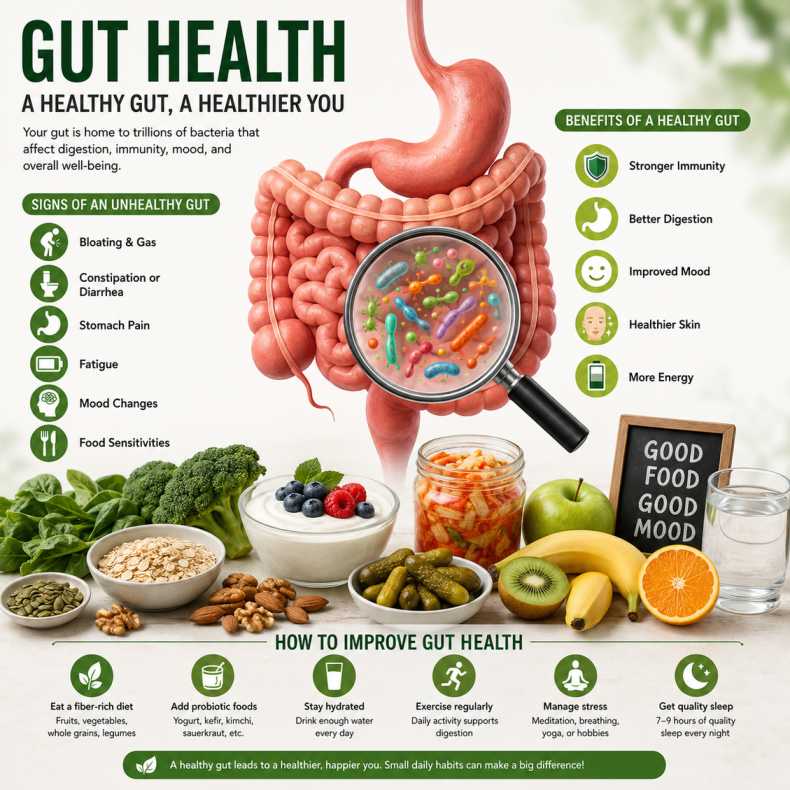
You do not need an expensive “gut detox” or a complicated supplement routine to start improving your digestive habits.
1. Eat More Fiber-Rich Foods
Good sources include:
- Oats
- Whole grains
- Beans
- Lentils
- Chickpeas
- Apples
- Berries
- Vegetables
- Nuts
- Seeds
If your current diet is low in fiber, increase it gradually and drink adequate fluids.
A sudden increase can cause temporary gas or bloating.
2. Eat a Variety of Plant Foods
Instead of focusing on one “superfood,” aim for variety.
Different plant foods provide different types of fiber and other compounds that interact with the gut microbiome.
A practical approach is to regularly rotate:
Vegetables + fruits + legumes + whole grains + nuts + seeds.
3. Include Fermented Foods When They Suit You
Some fermented foods contain live microorganisms.
Examples include:
- Yogurt with live cultures
- Kefir
- Kimchi
- Sauerkraut
- Some fermented soy foods
However, not every fermented food contains probiotics with demonstrated health benefits. The microorganisms and their effects vary between products.
4. Stay Hydrated
Adequate fluid intake is particularly important when increasing fiber.
Fiber and fluids work together to help maintain softer, easier-to-pass stools.
Your fluid needs depend on factors such as body size, activity, climate, diet, and health conditions.
5. Exercise Regularly
Regular movement can support overall health and may help promote regular bowel movements.
You do not necessarily need an intense workout.
Walking, cycling, swimming, strength training, and other forms of physical activity can all contribute to an active lifestyle.
6. Get Enough Sleep
Poor sleep can affect appetite, energy, stress levels, and daily habits.
While sleep should not be presented as a treatment for every digestive problem, maintaining a consistent sleep routine is an important part of overall health.
7. Manage Stress
Stress-management techniques may include:
- Walking
- Breathing exercises
- Meditation
- Yoga
- Spending time outdoors
- Relaxing hobbies
- Maintaining social connections
For people with digestive disorders such as IBS, the relationship between the brain and digestive system can be particularly relevant.
Best Foods for Gut Health
Rather than looking for one perfect gut-health food, focus on dietary diversity.
Fiber-Rich Foods
- Oats
- Beans
- Lentils
- Chickpeas
- Fruits
- Vegetables
- Whole grains
Prebiotic Foods
Prebiotics are substances that are selectively used by microorganisms and can influence the composition or activity of the gut microbiota.
Examples of foods containing prebiotic fibers include certain:
- Onions
- Garlic
- Leeks
- Asparagus
- Bananas
- Whole grains
- Legumes
Individual tolerance varies, particularly in people with IBS.
Fermented Foods
Depending on the product:
- Yogurt
- Kefir
- Kimchi
- Sauerkraut
- Miso
- Other fermented foods
Remember that fermented does not automatically mean probiotic. A product needs appropriate live microorganisms and evidence of a health benefit to meet the scientific definition of a probiotic.
Probiotics and Gut Health: Do They Really Help?
Probiotics are live microorganisms that provide a health benefit when consumed in adequate amounts. Importantly, probiotics are identified by genus, species, and strain, and different strains can produce different effects.
This means the statement:
“Probiotics are good for everyone.”
is too broad.
Research has investigated probiotics for conditions such as antibiotic-associated diarrhea and some digestive disorders. However, the evidence varies significantly depending on the specific probiotic strain, condition, dose, and person.
For example, evidence for probiotics in IBS has been mixed, and not all probiotic products have been shown to improve overall IBS symptoms.
Should You Take a Probiotic Supplement?
Not necessarily.
If you are healthy and have no specific reason to use one, you may not need a probiotic supplement.
If you are considering one for a digestive condition, it is better to discuss the specific product and evidence with a healthcare professional.
Prebiotics vs. Probiotics
These terms are often confused.
| Prebiotics | Probiotics |
|---|---|
| Substances that can be used by certain microorganisms | Live microorganisms |
| Often found in fiber-rich foods | Found in some foods and supplements |
| Help influence the gut microbiome | Add specific microorganisms |
| Effects depend on the specific prebiotic | Effects depend heavily on strain |
There is also a third term: synbiotics, which refers to products or combinations containing both probiotics and prebiotics.
Foods and Habits to Limit
There is no universal list of foods that everyone with digestive symptoms must avoid.
However, some people notice symptoms after consuming:
- Very large meals
- Excessive alcohol
- Highly processed foods
- Large amounts of added sugar
- Excessive carbonated drinks
- Foods that personally trigger digestive symptoms
The right approach is not to create an unnecessarily restrictive diet.
If a particular food repeatedly causes symptoms, keeping a simple food-and-symptom diary may help identify patterns that can then be discussed with a healthcare professional or registered dietitian.
What About Gut Detoxes and Cleanses?
“Gut detox” products and colon cleanses are heavily marketed online, but your digestive system already has organs responsible for processing food and removing waste.
There is no good reason for a healthy person to routinely use aggressive colon cleanses simply to “remove toxins.”
Some cleansing products can cause diarrhea, dehydration, electrolyte disturbances, or other problems.
A better long-term approach is to support normal digestive function through:
fiber + varied foods + adequate fluids + physical activity + appropriate medical care.
Can Gut Health Affect the Brain and Mood?
The gut and brain communicate through multiple biological pathways, and researchers are actively studying the relationship between the gut microbiome, nervous system, immune system, and metabolism.
However, online claims often go much further than the current evidence.
For example, it would be misleading to say:
“Anxiety means you have bad gut bacteria.”
Mental health conditions have many possible causes, and digestive symptoms do not prove that the microbiome is responsible.
The gut-brain relationship is an important research area, but it should not be used to replace appropriate medical or mental-health care.
When Should You See a Doctor?
Occasional bloating or mild digestive upset is common.
However, speak with a healthcare professional if digestive symptoms are:
- Persistent
- Recurrent and worsening
- Affecting daily activities
- Associated with unexplained weight loss
- Accompanied by persistent abdominal pain
- Associated with blood in the stool
- Associated with prolonged diarrhea
- Associated with persistent vomiting
- Accompanied by fever or significant weakness
For constipation specifically, NIDDK recommends medical evaluation when symptoms do not improve with self-care or when warning signs such as blood in the stool, continual abdominal pain, vomiting, fever, inability to pass gas, or unexplained weight loss occur.
How Long Does It Take to Improve Gut Health?
There is no universal timeline.
Some people notice changes in bowel regularity after making dietary or lifestyle changes, while others may need several weeks or longer.
The underlying cause matters.
For example, constipation caused by low fiber intake may respond differently from symptoms caused by IBS, inflammatory bowel disease, medication effects, food intolerance, or another medical condition.
Instead of looking for a 7-day gut reset, focus on sustainable habits.
Frequently Asked Questions About Gut Health
How do I know if my gut is healthy?
There is no single symptom or home test that defines a healthy gut. Regular bowel habits, comfortable digestion, a varied diet, and the absence of persistent digestive symptoms can be reassuring, but ongoing symptoms should be evaluated based on their cause.
What are the most common signs of poor gut health?
Common digestive signs include bloating, gas, constipation, diarrhea, abdominal discomfort, and changes in bowel habits. These symptoms can have many causes and do not automatically indicate an unhealthy gut microbiome.
What is the best food for gut health?
There is no single best food. A varied diet containing vegetables, fruits, legumes, whole grains, nuts, and seeds provides different types of fiber and nutrients that support overall digestive health.
Are probiotics good for gut health?
Some probiotic strains may provide specific health benefits, but effects vary between strains and conditions. Not every probiotic supplement has the same evidence behind it.
Are yogurt and fermented foods good for the gut?
Some fermented foods can contain live microorganisms, and yogurt may contain probiotics. However, not every fermented food provides microorganisms with proven probiotic benefits.
Can increasing fiber improve gut health?
Increasing dietary fiber can support bowel regularity and is an important part of a healthy dietary pattern. Adults generally need around 22–34 grams per day depending on age and sex. Increase fiber gradually if your current intake is low.
Can poor gut health cause bloating?
Digestive conditions, dietary factors, constipation, and food-related triggers can all contribute to bloating. Persistent or severe bloating should be evaluated rather than automatically blamed on gut bacteria.
Should I avoid gluten for better gut health?
Not everyone needs to avoid gluten. People with celiac disease or certain other medical conditions may need specific dietary restrictions, but removing gluten without a medical reason is not automatically better for gut health.
Are gut detoxes necessary?
For most healthy people, routine gut detoxes or colon cleanses are not necessary. A balanced diet, adequate fluids, physical activity, and appropriate medical care are more sustainable approaches to digestive health.
Can stress affect digestion?
Yes. Stress can influence digestive function and may worsen symptoms in some people, particularly those with disorders such as IBS. However, persistent digestive symptoms should not automatically be attributed to stress.
When should I see a doctor for digestive problems?
Seek medical advice for persistent or worsening symptoms, unexplained weight loss, blood in the stool, persistent abdominal pain, prolonged diarrhea, repeated vomiting, fever, or other concerning changes.
Key Takeaway
Good gut health is not about having a perfect microbiome or taking a daily probiotic supplement.
A healthier digestive routine is usually built around dietary variety, adequate fiber, sufficient fluids, regular physical activity, appropriate sleep, stress management, and avoiding unnecessary restrictive diets or unproven “detox” treatments.
Probiotics and prebiotics can be useful in specific circumstances, but their effects depend on the particular product, strain, dose, and health condition.
Most importantly, persistent digestive symptoms should not simply be labeled as “poor gut health.” They may have an identifiable medical cause, and getting the right diagnosis is more useful than trying multiple supplements or cleanses.
Medical Disclaimer: This article is intended for general educational purposes and does not replace professional medical advice, diagnosis, or treatment. If you have persistent, severe, or concerning digestive symptoms, consult a qualified healthcare professional.

Hi, I’m Amrita Pandey. I specialize in writing about health, pregnancy, yoga, natural remedies, beverages, fruits, and vegetables. I enjoy creating clear, well-researched content that helps readers make informed decisions and build healthier everyday habits.