Walking is easy. Walking with a little extra load might be the smartest upgrade you can make to it. Here is everything you need to know before you strap one on.
Scroll through any fitness feed today and you will notice something new: people walking through parks, neighbourhoods and treadmills wearing snug vests that look like something between a life jacket and a bulletproof jacket. This is weighted vest walking, and it is one of the fastest-rising health trends of 2026. Search interest in “weighted vest for walking” has jumped dramatically in recent months, and it is easy to see why.
The idea is beautifully simple. You already walk. You add a little weight to your torso. Your body has to work a bit harder for every single step, without you needing a gym, a trainer or complicated equipment. In this guide we will cover what weighted vest walking is, how it works, what the research suggests, who should be careful, how much weight to start with, and a complete four-week plan you can begin this week.
What Is Weighted Vest Walking?
Weighted vest walking means wearing an adjustable vest, usually loaded with small sand, metal or iron pockets, while you walk at a comfortable pace. The vest sits close to your chest and back, so the extra load stays near your centre of gravity. That is very different from ankle or wrist weights, which swing away from your body and can put unnatural stress on joints.
Most vests weigh between 2 kg and 10 kg (about 5 to 22 lb), and many allow you to add or remove weight in small steps. That adjustability is the secret to using them safely: you begin light and progress slowly as your body adapts.
Athletes and military personnel have trained with load for decades, a practice often called “rucking”. What is new is that ordinary people, from office workers to retirees, are now using the same principle in a gentler, more accessible way.
Why Is It Trending Right Now?
Several things have come together to make weighted vest walking popular:
- Walking is already a habit. People do not need to learn a new sport. They simply upgrade something familiar.
- Time is short. Adding load makes a 30-minute walk feel and work more like a longer one.
- Strength matters more than ever. Health experts increasingly stress muscle and bone strength, not just cardio, especially as we age.
- Social media proof. Simple before-and-after routines, treadmill clips and “walk with me” videos have made the trend highly visible.
- Low barrier to entry. One piece of equipment, no membership, no special skills.
How Does a Weighted Vest Make Walking Harder?
When you carry extra weight, your muscles must produce more force to lift and move your body with every step. Your heart also has to pump a little harder to supply those working muscles with oxygen. The result is a higher energy cost for the same distance and speed.
Research on loaded walking suggests that the additional energy burned roughly rises with the amount of weight carried, which is why even a modest vest can make a noticeable difference. Your legs, glutes, core and back muscles all engage more, and your bones receive a stronger mechanical signal than they do from plain walking.
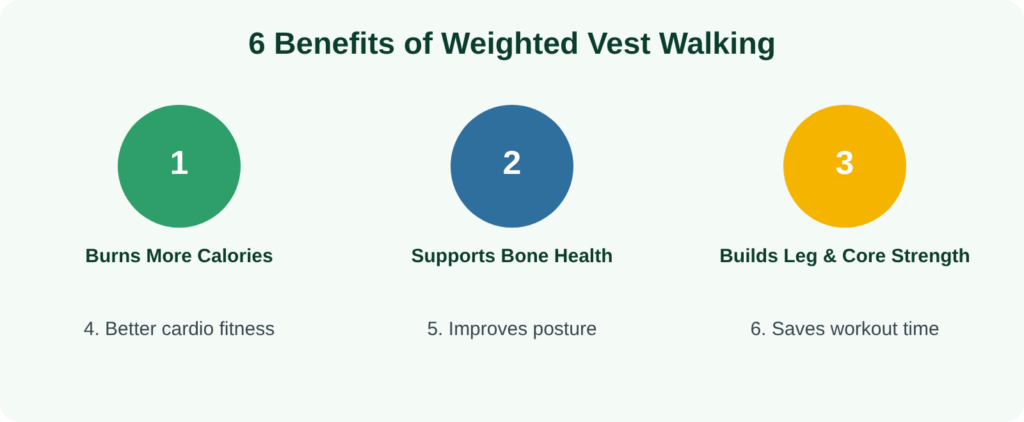
Top Benefits of Weighted Vest Walking
1. Burns More Calories Without Extra Time
The most talked-about benefit is a higher calorie burn. Because your body moves more mass, the same walk uses more energy. Depending on the weight you carry and how fast you walk, the increase is typically a modest but useful percentage. It will not replace a healthy diet, but over weeks and months the extra effort adds up, particularly for people who cannot manage long walks.
2. May Support Bone Health
Bones respond to load. When you walk with additional weight, the impact and muscle pull on your skeleton increase slightly, which encourages bones to stay dense and strong. Some studies in older and post-menopausal women have explored weighted vests as part of exercise programmes aimed at slowing bone loss. The results are promising, but the vest works best alongside proper nutrition, enough calcium and vitamin D, and medical guidance.
3. Builds Lower-Body and Core Strength
Your quads, hamstrings, glutes, calves and the deep muscles of your trunk all work harder to keep you upright and moving. Over time, this can improve stair climbing, getting up from a chair and general stability. For beginners it is a gentle introduction to strength work, not a replacement for full resistance training.
4. Improves Cardiovascular Fitness
A brisk walk with a vest raises your heart rate more than the same walk without one. That means you can reach a moderate-intensity zone at a slower, more joint-friendly pace, which is helpful if running is uncomfortable.
5. Encourages Better Posture
A properly fitted vest gently reminds you to stand tall. Many users find themselves engaging their core and keeping their shoulders back. If the load is too heavy, however, you may lean forward, so start light.
6. Makes a Short Walk Feel Like a Real Workout
Busy schedule? A 20 to 30 minute walk with a light vest offers more challenge than the same walk without one. That makes consistency easier, and consistency is where health results come from.
What Does the Science Say?
It is worth being honest here. Weighted vest research exists, but it is smaller and less consistent than research on plain walking, which remains one of the most proven habits for heart health, mood, blood sugar and longevity. Here is what we can reasonably say:
- Carrying extra load increases energy expenditure during walking.
- Vests have been studied in older adults and in post-menopausal women as a tool to help maintain muscle and bone.
- Benefits appear greatest when the vest is combined with regular exercise, good protein intake and, where advised, strength training.
- There is no magic number of pounds or kilograms that works for everyone.
Weighted Vest Walking vs Normal Walking
| Factor | Normal Walking | Weighted Vest Walking |
|---|---|---|
| Effort level | Low to moderate | Moderate to high |
| Calorie burn | Baseline | Higher for the same time |
| Muscle and bone load | Light | Greater |
| Joint stress | Low | Slightly higher if overloaded |
| Equipment needed | None | Adjustable vest |
| Best for | Everyone, every day | Healthy adults ready to progress |
Who Should Be Careful or Avoid It?
Talk to your doctor first if you have any of the following:
- Heart disease, high blood pressure or breathing problems
- Osteoporosis or a history of fractures
- Back, neck, hip, knee or ankle problems
- Balance problems or a risk of falls
- Pregnancy or recent surgery
Even healthy people should avoid jumping straight to heavy loads. Most injuries from vests happen when someone wears too much weight, too soon, for too long.
How Much Weight Should You Use?
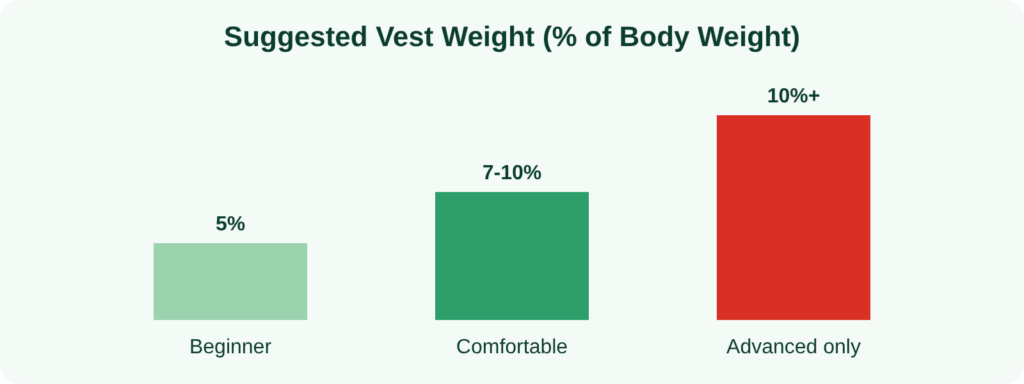
The golden rule is to start light. A common recommendation is about 5% of your body weight at first, and many people stay between 5% and 10%. Going beyond that is usually unnecessary for walking and increases injury risk.
5%Beginner
7-10%Comfortable
10%+Advanced only
| Your Body Weight | 5% Starting Load | 10% Upper Range |
|---|---|---|
| 50 kg | 2.5 kg | 5 kg |
| 60 kg | 3 kg | 6 kg |
| 70 kg | 3.5 kg | 7 kg |
| 80 kg | 4 kg | 8 kg |
| 90 kg | 4.5 kg | 9 kg |
If you feel pain in your back, knees or hips, or if your walking form changes, the vest is too heavy. Reduce the load or take it off.
A 4-Week Beginner Plan
This simple schedule is designed for healthy adults who already walk regularly. Adjust it to how you feel.
| Week | Vest Load | Duration | Frequency |
|---|---|---|---|
| Week 1 | Around 3 to 5% of body weight | 15 to 20 minutes | 2 to 3 days |
| Week 2 | Same load | 25 minutes | 3 days |
| Week 3 | Add a little weight (up to about 7%) | 25 to 30 minutes | 3 days |
| Week 4 | Same load, add gentle hills or stairs | 30 minutes | 3 to 4 days |
Always walk without the vest on your rest days, and keep at least one or two full recovery days each week. After week four, you can either hold the same load and increase time, or slightly increase weight, but never both at once.
How to Wear and Fit the Vest Correctly
- Choose a snug fit. The vest should sit close to your body with no bouncing.
- Keep weight high and centred. Load around your upper back and chest is more comfortable than weight low on the abdomen.
- Distribute evenly. Front and back should be balanced so you do not lean.
- Adjust the straps. Tighten the side straps so the vest does not slide.
- Warm up first. Walk for five minutes without load, then put it on if you prefer.
Technique Tips for Better Results
- Stand tall. Keep your chest lifted and your eyes forward.
- Take natural steps. Do not overstride. Shorter, quicker steps are kinder to your knees.
- Engage your core lightly. Imagine gently drawing your belly button toward your spine.
- Swing your arms naturally. They help balance and rhythm.
- Breathe steadily. You should be able to speak in short sentences.
Ways to Make It More Interesting
Once the basic routine feels easy, you can add variety without adding much weight:
- Interval walking: Alternate two minutes of brisk walking with two minutes of easy walking.
- Incline or hills: A gentle slope increases the challenge more safely than extra weight.
- Stair climbing: Great for glutes and thighs, but only after your body has adapted.
- Nature walks: Park or trail walking on softer ground reduces joint impact.
- Walking with a friend: Accountability keeps the habit alive.
Common Mistakes to Avoid
- Starting too heavy. The number one cause of soreness and injury.
- Wearing it all day. Use it for exercise only, not for hours of normal activity.
- Running with it too soon. Impact forces rise sharply with load. Master walking first.
- Ignoring pain. Mild muscle fatigue is normal. Sharp or joint pain is not.
- Skipping strength and mobility work. A vest complements, not replaces, a balanced routine.
- Buying the cheapest, poorly fitted vest. A bad fit means bouncing and discomfort.
How to Choose the Right Weighted Vest
With so many options available online and in stores, keep these points in mind:
- Adjustable weight: Removable weight packs let you start light and progress gradually.
- Breathable fabric: Especially important in hot and humid climates.
- Comfortable straps and padding: Look for padded shoulders and secure side adjustments.
- Even weight distribution: Many small pockets are better than a few large ones.
- Size range: Check chest measurements and the manufacturer’s size guide.
- Quality and reviews: Read real user feedback about stitching, zips and durability.
Tips for Hot and Humid Weather
If you live in a warm region, a vest can make you feel hotter and sweat more. Walk early in the morning or after sunset, choose a breathable inner shirt, carry water, and shorten your sessions on very humid days. Stop and rest if you feel dizzy, unusually breathless or overheated.
Can It Help With Weight Loss?
It can support weight loss, but expectations should be realistic. A weighted vest increases the energy you burn during a walk, and that may help create the calorie deficit needed for fat loss. However, nutrition, sleep, stress and overall activity matter just as much. Think of the vest as one useful tool in a bigger plan: balanced meals, enough protein, good hydration, consistent walking and adequate rest.
Is Weighted Vest Walking Safe for Older Adults?
Many older adults benefit from load-bearing exercise, and weighted vests have been used in supervised studies. Still, safety comes first. Older adults should get medical clearance, use very light loads to begin with, walk on even surfaces, wear supportive footwear, and consider walking with a partner. A physiotherapist can help you decide on a suitable weight.
Myths and Facts
| Myth | Fact |
|---|---|
| The heavier the vest, the better | Too much weight raises injury risk. Gradual progress works better. |
| Vests burn belly fat directly | You cannot spot-reduce fat. Vests raise overall energy use. |
| It replaces the gym | It helps, but it does not replace full-body strength training. |
| Only athletes can use it | Beginners can use light loads, with medical guidance if needed. |
Your Simple Action Checklist
- Check with your doctor if you have any health conditions.
- Choose an adjustable, well-fitting vest.
- Start at around 5% of your body weight or lighter.
- Walk 15 to 20 minutes, two or three times a week.
- Increase time first, weight later.
- Rest, hydrate and listen to your body.
Final Thoughts
Weighted vest walking is popular for a good reason: it takes the world’s most accessible exercise and makes it slightly more challenging, slightly more efficient and slightly more strengthening. Done sensibly, it can boost calorie burn, support muscle and bone health, and make short walks feel more worthwhile.
But the real magic is not in the vest. It is in the habit. Start light, stay patient, be consistent, and let your body adapt step by step. If you are unsure whether it suits you, a quick conversation with your doctor or a qualified trainer is the best first step you can take.
Frequently Asked Questions (FAQs)
1. Is weighted vest walking good for beginners?
Yes, if the weight is very light and you are otherwise healthy. Begin with about 3 to 5% of your body weight and short sessions, then progress slowly.
2. How often should I walk with a weighted vest?
Two to four days a week is a sensible range for most people. Keep some days for normal walking or rest so your muscles, bones and joints can recover.
3. How long should each session be?
Start with 15 to 20 minutes and build up to 30 to 45 minutes over several weeks. Increase duration before increasing weight.
4. Does a weighted vest burn belly fat?
No exercise can target belly fat alone. A vest helps you burn more calories overall, and combined with a healthy diet it can support fat loss across the body.
5. Can I run with a weighted vest?
It is best to master walking first. Running increases impact forces, and adding load can raise the risk of injury. If you want to run with a vest, use a very light load and consider guidance from a trainer.
6. Is a weighted vest bad for the back or knees?
It can be if it is too heavy or poorly fitted. A snug, well-balanced vest at a light load is generally tolerated well by healthy people, but anyone with back or knee problems should consult a doctor first.
7. Can weighted vests improve bone density?
Load-bearing exercise is known to support bone health, and some studies have explored vests for this purpose. Results vary, so treat a vest as a helpful addition, not a treatment for osteoporosis.
8. Can women use weighted vests?
Absolutely. Vests come in various sizes and fits, and women, especially post-menopausal women, are often the focus of bone and muscle research. Choose a comfortable fit and progress gradually.
9. Can I wear a weighted vest all day?
Not recommended. Use it only for planned exercise sessions. Long hours of extra load can strain your back, hips and joints.
10. What is a good alternative if I do not have a vest?
A comfortable backpack with a small, evenly packed load (like water bottles or books) can work for short walks, but a proper vest is more stable and balanced. Always start with very little weight.
Disclaimer: This article is for general information and education only. It is not medical advice. Please consult a qualified healthcare professional before starting any new exercise programme, especially if you have a medical condition.

Hi, I’m Amrita Pandey. I specialize in writing about health, pregnancy, yoga, natural remedies, beverages, fruits, and vegetables. I enjoy creating clear, well-researched content that helps readers make informed decisions and build healthier everyday habits.