When the weather changes and your nose starts to run, your kitchen already holds some of the best comfort remedies. Here is what works, what is just tradition, and how to use each remedy safely.
Everyone gets a cold now and then. Adults typically catch two or three a year, and children can catch even more. As seasons change and temperatures swing between hot afternoons and cool nights, sore throats, blocked noses and lingering coughs become common in many homes.
Most colds are caused by viruses, so antibiotics do not help. The usual treatment is rest, fluids and time, along with measures that ease your symptoms. That is where natural remedies for cold and cough come in. Some, like honey, warm fluids and salt water gargles, have reasonable support behind them. Others, like many herbal kadhas, are mostly based on tradition and comfort. In this guide, we look at 12 popular remedies honestly, including how to use them, how strong the evidence is, and when it is time to see a doctor.
Understanding Cold and Cough First
A common cold is a mild viral infection of the nose and throat. Symptoms such as a runny or blocked nose, sneezing, sore throat, mild cough and tiredness usually peak in two to three days and improve within 7 to 10 days. A cough can linger for up to two or three weeks after the other symptoms are gone, as the airways heal.
Remedies do not cure the virus. What they can do is make you more comfortable while your immune system does its work.
| Symptom | Common Cold | Flu | Allergy |
|---|---|---|---|
| Onset | Gradual | Sudden | Sudden, on exposure |
| Fever | Rare or mild | Common and often high | No |
| Body aches | Mild | Common and strong | No |
| Sneezing and itchy eyes | Sometimes | Sometimes | Very common |
| Duration | 7 to 10 days | 1 to 2 weeks | As long as exposed |
If you are not sure what you have, or if symptoms are severe, get checked.
12 Natural Remedies for Cold and Cough
1. Honey
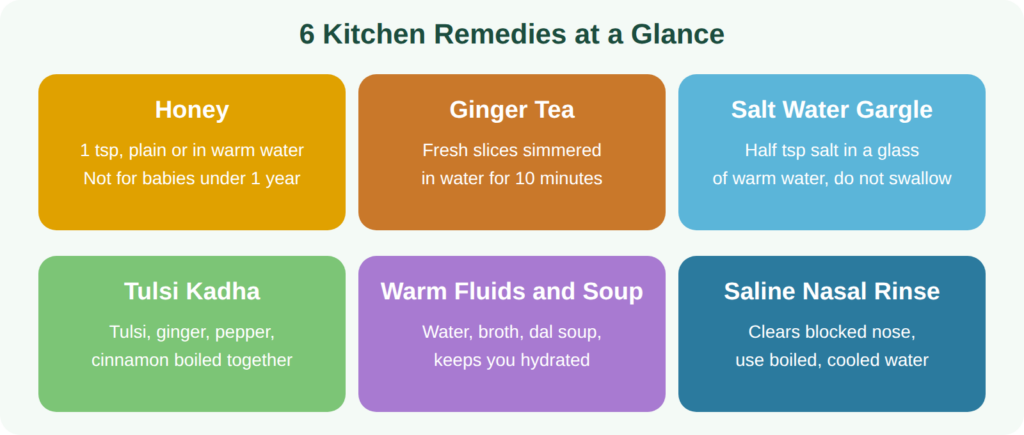
Honey coats the throat and may calm coughing, especially at night. Studies in children older than one year suggest it can reduce cough and improve sleep compared with no treatment. Take one teaspoon plain, or stir it into warm (not boiling) water or herbal tea. Never give honey to a baby under 12 months, because of the risk of infant botulism. People with diabetes should count it as sugar.
2. Warm Fluids
Water, herbal tea, thin soups and warm milk keep you hydrated and help thin mucus. The warmth can also soothe your throat. There is no need to force huge amounts. Drink regularly and keep your urine pale.
3. Salt Water Gargle
Stir about half a teaspoon of salt into a glass of warm water, gargle for 15 to 30 seconds and spit it out. Repeat a few times a day. It can ease throat pain and swelling. Do not swallow the water, and do not use it for young children who cannot gargle safely.
4. Ginger Tea
Ginger has natural anti-inflammatory compounds and gives a warming, soothing feeling. Simmer a few fresh slices in water for about 10 minutes, strain, and add honey or lemon if you like. Evidence for ginger in colds is limited, but it is a pleasant, low-risk drink. Very large amounts may cause heartburn or interact with blood-thinning medicines.
5. Turmeric Milk (Haldi Doodh)
A popular Indian remedy, made by adding a pinch of turmeric and, if you like, a little black pepper to warm milk. Turmeric contains curcumin, which has anti-inflammatory properties in lab studies, but there is not much direct proof that it shortens colds. It is warm, comforting and generally safe in food amounts. Avoid it if milk upsets you, and check with a doctor before using turmeric supplements.
6. Tulsi (Holy Basil) and Herbal Kadha
A traditional kadha combines tulsi leaves, ginger, black pepper, cinnamon and cloves, boiled in water for around 10 minutes and sweetened with a little jaggery or honey. These spices give warmth and aroma that many people find helpful for blocked noses and sore throats. Scientific support is limited, and too much pepper or spice can irritate the stomach, so keep to one or two cups a day.
7. Steam or Humid Air
Many people feel that breathing warm, moist air loosens a stuffy nose. Research on steam inhalation shows mixed results, and the real risk is burns from hot water, especially in children. A safer option is to sit in a bathroom filled with steam from a warm shower, or use a clean humidifier. Never let a child lean over a bowl of boiling water.
8. Saline Nasal Rinse or Spray
Salt water rinses can clear mucus and ease congestion. Use ready-made saline sprays or drops, or a rinse kit. If you make your own solution, always use distilled water, or water that has been boiled and cooled, never plain tap water.
9. Chicken or Vegetable Soup
Warm soup provides fluids, salt and nutrients when your appetite is low. Some studies suggest chicken soup may have mild anti-inflammatory effects. At the very least, it is easy to eat and comforting. Vegetarian dal or vegetable soups work just as well for hydration.
10. Ajwain (Carom Seeds) and Black Pepper
Some families tie roasted ajwain in a cloth to smell for nasal relief, or chew a pinch with warm water. The aroma may help you feel less blocked, though proper evidence is lacking. Use small amounts and do not give strong spices to infants.
11. Vitamin C Foods
Lemon, orange, amla and guava are nutritious, but research shows vitamin C does not prevent colds in most people, and it may shorten them only slightly in regular users. Eat these foods as part of a healthy diet rather than expecting quick relief. Very high-dose supplements can upset the stomach.
12. Rest, Sleep and Head Elevation
This is the most underrated remedy. Sleep helps your immune system work at its best. Sleeping with your head slightly raised on an extra pillow can ease post-nasal drip and night coughing. Stay home if you have a fever or feel unwell, both to recover and to avoid spreading the infection.
Remedy Summary Table
| Remedy | Helps With | Evidence Level |
|---|---|---|
| Honey (age 1+) | Cough, sore throat | Reasonable |
| Salt water gargle | Sore throat | Reasonable |
| Warm fluids | Hydration, throat comfort | Reasonable |
| Saline nasal rinse | Blocked nose | Reasonable |
| Rest and sleep | Overall recovery | Strong |
| Ginger tea | Throat comfort | Limited |
| Turmeric milk | Comfort | Limited |
| Tulsi kadha | Comfort, congestion | Mostly traditional |
| Steam or humid air | Congestion | Mixed |
| Soup | Hydration, nutrition | Some |
| Vitamin C foods | General nutrition | Small effect at best |
A Simple Home Kadha Recipe
Here is an easy kadha for adults:
- Boil 2 cups of water in a pan.
- Add 6 to 8 tulsi leaves, a small piece of crushed ginger, 2 to 3 black peppercorns, a small cinnamon stick and 1 to 2 cloves.
- Simmer for 8 to 10 minutes until the water reduces to about one cup.
- Strain into a cup and allow it to cool slightly.
- Add half to one teaspoon of honey or jaggery if you like the taste.
- Sip warm, once or twice a day.
Natural Remedies for Cough Types
Dry, Tickly Cough
Honey, warm fluids, throat lozenges (for adults and older children) and humid air can soothe irritation. Avoid dry, dusty environments.
Wet or Productive Cough
Fluids, steam from a warm shower and rest help loosen mucus. Coughing is your body’s way of clearing the airways, so do not try to suppress it completely unless it keeps you awake.
Night Cough
Raise your head with extra pillows, take a spoon of honey before bed if you are over one year old, and keep the bedroom air comfortably humid, not damp.
Who Needs Extra Care?
- Babies and toddlers: Never give honey under 12 months. Avoid herbal preparations and strong spices. Cough and cold medicines are generally not advised for young children, so speak to a paediatrician.
- Pregnant women: Many herbs and strong kadhas are not well studied in pregnancy. Ask your doctor before using them.
- People with diabetes: Honey, jaggery and sweetened drinks affect blood sugar.
- People with high blood pressure or kidney problems: Take care with salty preparations, and never swallow gargle water.
- People on regular medicines: Large amounts of ginger, turmeric and other herbs may interact with blood thinners and other drugs.
- Older adults and people with asthma, heart or lung disease: Colds can turn serious more easily, so get medical advice early.
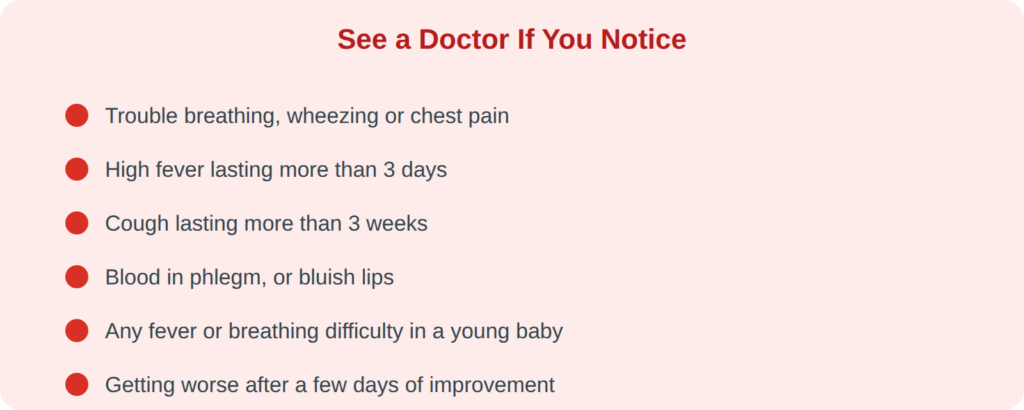
When to See a Doctor
Common Mistakes to Avoid
- Taking antibiotics on your own. They don’t work against viruses and can cause side effects and resistance.
- Overdoing spices and kadha. Too much pepper, clove or ginger can cause acidity and stomach upset.
- Using hot steam carelessly. Burns are a real risk.
- Giving honey to infants.
- Ignoring persistent symptoms.
- Going back to work or school too soon. Rest helps you recover and protects others.
How to Prevent Colds Naturally
- Wash your hands often with soap and water.
- Avoid touching your eyes, nose and mouth.
- Eat a balanced diet with plenty of fruits, vegetables and protein.
- Sleep 7 to 9 hours, as adults.
- Stay active with regular exercise.
- Avoid smoking and smoky spaces.
- Keep your distance from people who are sick.
- Get vaccinated, such as the annual flu vaccine, if your doctor recommends it.
Myths and Facts
| Myth | Fact |
|---|---|
| Cold weather or wet hair causes colds | Viruses cause colds, though cold weather may make us more exposed indoors. |
| Antibiotics cure colds | Antibiotics do not work on viruses. |
| Lots of vitamin C cures a cold | Vitamin C has, at best, a small effect on duration. |
| Milk increases mucus | Milk does not increase mucus production, though it may feel thicker in the throat. |
| Natural means completely safe | Herbs and spices can still cause side effects and interactions. |
Quick Recovery Checklist
- Rest and sleep as much as you can.
- Drink warm fluids regularly.
- Use honey (age 1+) and salt water gargles for the throat.
- Try saline nasal drops for a blocked nose.
- Keep the air comfortably humid.
- Watch for warning signs and see a doctor if needed.
Final Thoughts
Natural remedies for cold and cough can make you feel better, and many of them are safe, simple and inexpensive. Honey, warm fluids, salt water gargles, saline rinses and plenty of rest are the ones with the best backing. Traditional remedies like ginger, turmeric milk and kadha can add comfort, as long as you use them sensibly.
Remember that natural does not mean risk-free, and home care has its limits. Watch your symptoms, protect babies and vulnerable people, and see a doctor when something does not seem right. With a little patience and care, most colds pass on their own.
Frequently Asked Questions (FAQs)
1. What is the fastest natural remedy for cold and cough?
No remedy makes a cold disappear overnight. Rest, fluids, honey (for age 1+), salt water gargles and saline nasal drops give the most reliable symptom relief.
2. Is honey good for cough?
Studies suggest honey can ease cough in children over one year and in adults. It should never be given to babies under 12 months.
3. How long does a cold usually last?
Most colds get better in 7 to 10 days. A cough can last two to three weeks. See a doctor if symptoms last longer or get worse.
4. Does turmeric milk cure a cold?
It doesn’t cure it, but it is a warm, comforting drink that many people enjoy. Scientific proof that it shortens colds is limited.
5. Is steam inhalation safe?
It may give temporary relief for blocked noses, but scalds are a real danger, especially for children. Using a steamy bathroom or a humidifier is safer.
6. Can I give home remedies to my baby?
Be very careful. Do not give honey to babies under one year, and do not give herbal mixtures or strong spices. Talk to a paediatrician about any cold in a young baby.
7. Do I need antibiotics for a cold?
No. Colds are caused by viruses, and antibiotics don’t treat them. A doctor will prescribe them only if there is a bacterial infection.
8. Which foods should I avoid during a cold?
There is no strict list. Some people find that very spicy, oily or sugary foods irritate the throat. Stay hydrated and eat light, nutritious foods.
9. Is a cough that lasts three weeks normal?
A lingering cough after a cold is fairly common, but if it goes on for more than three weeks or comes with breathlessness, fever or blood, see a doctor.
10. Are natural remedies safe during pregnancy?
Some are, like warm fluids, salt water gargles and rest, but many herbal remedies are not well studied. Always check with your doctor first.
Disclaimer: This article is for general information and education only and is not medical advice. If you have a medical condition, are pregnant, or are treating a child, please consult a qualified healthcare professional before using any remedy.

Hi, I’m Amrita Pandey. I specialize in writing about health, pregnancy, yoga, natural remedies, beverages, fruits, and vegetables. I enjoy creating clear, well-researched content that helps readers make informed decisions and build healthier everyday habits.