Everyone has advice for a pregnant woman, from “eat for two” to “never touch papaya”. This guide separates facts from myths and gives you a practical, easy-to-follow plan for every trimester.
Food is one of the most powerful things you can control during pregnancy. Every meal helps build your baby’s brain, bones, blood and organs, and also keeps you strong, energetic and healthy through the changes ahead. The good news is that a healthy pregnancy diet doesn’t need to be expensive, complicated or full of imported “superfoods”. Simple home-cooked meals, planned with a little care, can give you almost everything you need.
In this article, we cover how your needs change, the key nutrients and the foods that provide them, what to avoid, how to manage nausea and cravings, a sample day of Indian meals, and answers to the most common questions. Please remember that this is general information, and your doctor or dietitian should always guide your personal plan.
Do You Really Need to “Eat for Two”?
Not quite. Pregnancy increases your need for nutrients much more than it increases your need for calories. General guidance suggests that you need little or no extra energy in the first trimester, and roughly 300 to 350 extra calories a day in the second and third trimesters. That is about the same as a glass of milk with a handful of nuts and a banana, not a second full meal.
What matters most is food quality. Aim for nutrient-dense foods such as vegetables, fruits, pulses, whole grains, dairy, eggs, nuts and, if you eat them, fish and lean meat, rather than extra sweets and fried snacks.
Key Nutrients for a Healthy Pregnancy
1. Folate (Folic Acid)
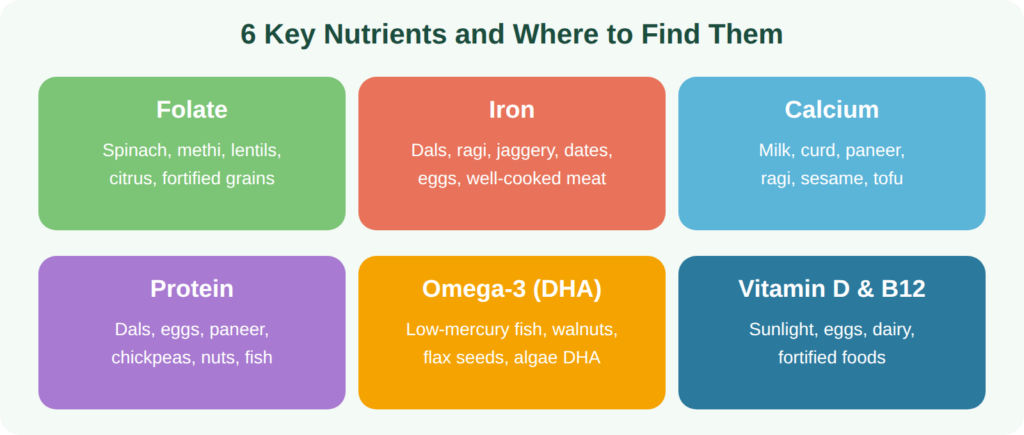
Folate helps form the baby’s brain and spinal cord and lowers the risk of neural tube defects. Doctors usually advise a folic acid supplement, ideally starting before conception and continuing at least through the first trimester. Some women need higher doses because of their medical history, so follow your doctor’s prescription. Food sources include green leafy vegetables, lentils, beans, citrus fruits and fortified cereals.
2. Iron
Your blood volume increases in pregnancy, so your iron needs rise sharply. Low iron can cause anaemia, tiredness and, if severe, risks for both mother and baby. Iron-rich foods include dals, chickpeas, ragi, dates, jaggery in moderation, green vegetables, eggs and well-cooked meat. Pair them with vitamin C foods, like lemon, amla, guava or oranges, to improve absorption. Tea and coffee can reduce absorption, so keep them away from your main meals. Many doctors prescribe iron and folic acid tablets, so take them as directed.
3. Calcium
Your baby needs calcium for bones and teeth. If your diet is low, the body may draw from your own bones. Include milk, curd, paneer, buttermilk, ragi, sesame seeds, almonds and tofu. Many doctors also prescribe calcium supplements, usually taken at a different time from iron.
4. Protein
Protein builds your baby’s cells and tissues. Needs rise, especially in the second and third trimesters. Good sources include dals, chickpeas, rajma, soya, paneer, curd, eggs, nuts, fish and chicken.
5. Omega-3 Fats (DHA)
DHA supports brain and eye development. If you eat fish, choose low-mercury options and cook them well. Vegetarians can get some omega-3 from walnuts, flax seeds and chia seeds, and some doctors suggest algae-based DHA supplements.
6. Vitamin D and Vitamin B12
Vitamin D helps calcium work, and B12 supports the nervous system and blood. Many people in India are low in one or both. Safe sun exposure, dairy and eggs help, but your doctor may check your levels and recommend supplements. Strict vegetarians and vegans especially need to watch their B12.
7. Iodine and Choline
Iodine supports thyroid function and brain development, so use iodised salt. Choline, found in eggs, milk and legumes, supports brain development as well.
Recommended Weight Gain in Pregnancy
Healthy weight gain depends on your weight before pregnancy. The following are commonly used general guidelines for a single baby:
| Pre-pregnancy BMI | Approximate Total Gain |
|---|---|
| Underweight | 12.5 to 18 kg |
| Normal weight | 11.5 to 16 kg |
| Overweight | 7 to 11.5 kg |
| Obese | 5 to 9 kg |
Twins, medical conditions and other factors change these numbers, so let your doctor set your personal target.
Trimester-by-Trimester Diet Tips
| Trimester | What Happens | Diet Focus |
|---|---|---|
| First (weeks 1 to 12) | Organs start forming; nausea and tiredness are common | Folate, small frequent meals, fluids, ginger or lemon for nausea if your doctor agrees |
| Second (weeks 13 to 27) | Energy returns; baby grows rapidly | Iron, calcium, protein, slightly more calories |
| Third (weeks 28 to birth) | Baby gains weight; heartburn and constipation appear | Protein, fibre, calcium, smaller meals, plenty of water |
Foods to Eat More Of
- Vegetables and fruits: Aim for a variety of colours daily. Wash and peel them well.
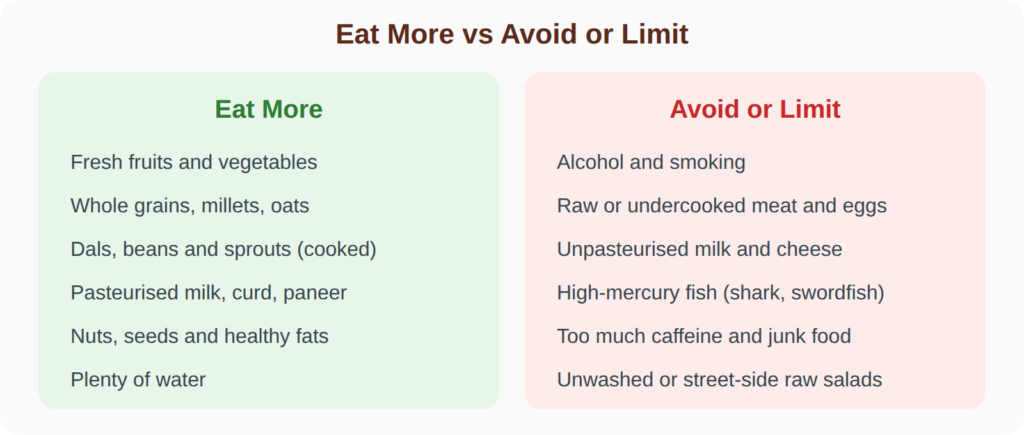
- Whole grains and millets: Brown rice, wheat, oats, ragi, jowar and bajra give fibre and B vitamins.
- Pulses and legumes: Excellent protein, iron and folate at low cost.
- Dairy: Choose pasteurised milk, curd and paneer.
- Nuts and seeds: A small handful daily gives healthy fats, magnesium and vitamin E.
- Eggs (fully cooked): A complete package of protein, choline and vitamins.
- Water and fluids: Water, coconut water, buttermilk and soups help prevent constipation and support blood volume.
Foods and Drinks to Avoid or Limit
- Alcohol and smoking: No amount of alcohol is known to be safe in pregnancy. Avoid tobacco and second-hand smoke as well.
- Raw or undercooked meat, fish and eggs: They can carry harmful bacteria and parasites. Cook thoroughly.
- Unpasteurised milk and soft cheeses: These can carry listeria bacteria.
- High-mercury fish: Avoid shark, swordfish and king mackerel. Choose low-mercury fish in moderation.
- Too much caffeine: Many health authorities suggest keeping it under about 200 mg a day, which is roughly one to two cups of coffee. Remember that tea, cola and chocolate also contain caffeine.
- Raw sprouts and unwashed salads: These can carry bacteria. Cook sprouts and wash produce well.
- Street food with poor hygiene: Infections and stomach upsets can be more troublesome in pregnancy.
- Excess vitamin A supplements and liver: Very high preformed vitamin A can harm the baby. Take supplements only as prescribed.
- Herbal teas and home remedies: Many are not well studied in pregnancy. Ask your doctor first.
- Junk, sugary and heavily processed foods: They add calories with few nutrients.
Managing Common Pregnancy Food Problems
Morning Sickness
Nausea affects many women, particularly in the first trimester. Try small, frequent meals, dry snacks such as crackers or toast before getting out of bed, cold or lightly flavoured foods, plenty of small sips of fluids, and avoiding strong smells. Ginger and vitamin B6 are commonly suggested, but ask your doctor about safe doses.
Heartburn and Acidity
Eat smaller meals, avoid lying down straight after eating, and cut back on spicy, oily and very acidic foods. Raising your head with an extra pillow at night can help.
Constipation
Increase fibre from fruits, vegetables, whole grains and pulses, drink enough water, and stay gently active. If you take iron tablets, tell your doctor if constipation becomes a problem.
Cravings and Aversions
Cravings are common and mostly harmless. Enjoy them in sensible portions and pair sweets with protein or fibre. Unusual cravings for non-food items such as chalk, soil or ice in large quantities can point to a nutrient deficiency, so mention them to your doctor.
Gestational Diabetes
Blood sugar screening is usually done in the second trimester. If you are diagnosed with gestational diabetes, a dietitian can help you spread carbohydrates through the day, choose high-fibre options and control portions. Do not skip meals or start strict dieting on your own.
A Sample Day of Indian Pregnancy Meals
| Time | Meal Idea |
|---|---|
| Early morning | Glass of milk or a few soaked almonds and a fruit |
| Breakfast | Vegetable poha or besan chilla with curd, or oats with fruit and nuts |
| Mid-morning | Coconut water or buttermilk and a seasonal fruit |
| Lunch | 2 rotis or a bowl of rice, dal, a green vegetable, salad and curd |
| Evening | Roasted chana, sprouts chaat (cooked), or a fruit with nuts |
| Dinner | Vegetable khichdi or roti with paneer or egg curry and vegetables |
| Before bed | Warm milk if it suits you |
Vegetarians should pay extra attention to protein, iron, B12 and DHA. Non-vegetarians can include eggs, well-cooked chicken and low-mercury fish in moderation.
Vegetarian and Vegan Pregnancy Diets
A well-planned vegetarian diet can support a healthy pregnancy. Combine grains with pulses to get complete proteins, include dairy or fortified alternatives, use iron-rich foods with vitamin C, and ask your doctor about B12, iron and algae-based DHA. Vegan diets need extra planning and regular monitoring, so consult a dietitian.
Staying Hydrated
Water supports increased blood volume, helps form amniotic fluid and eases constipation. Most women do well with around 8 to 10 glasses of fluids a day, and more in hot weather or when they are active. Pale yellow urine is a good sign. If you have a medical condition such as kidney or heart disease, ask your doctor about the right amount.
Exercise and Lifestyle Support Your Diet
Good nutrition works best alongside gentle activity such as walking or prenatal yoga (with your doctor’s approval), enough sleep, and stress management. Regular check-ups help your doctor adjust your diet, supplements and tests.
Common Pregnancy Diet Myths
| Myth | Fact |
|---|---|
| You must eat for two | You need better food, not double the food. |
| Saffron in milk makes the baby fair | There is no evidence that it changes skin colour, which is determined by genes. |
| Eating more ghee makes delivery easier | A little ghee is fine, but excess fat mainly adds weight. |
| Cravings show the baby’s gender | Cravings are influenced by hormones and have no link to the baby’s sex. |
| Supplements replace healthy food | Supplements fill gaps. They can’t replace a balanced diet. |
| Coffee is completely banned | Small amounts within limits are generally considered acceptable. |
When to Talk to Your Doctor or Dietitian
Quick Pregnancy Diet Checklist
- Eat small, balanced meals every 2 to 3 hours.
- Fill half your plate with vegetables and fruits.
- Include protein and calcium foods every day.
- Take prescribed supplements regularly.
- Drink plenty of clean water.
- Limit caffeine, and avoid alcohol and tobacco.
- Cook meat and eggs fully, and wash produce well.
- Keep all your antenatal check-ups.
Final Thoughts
A healthy pregnancy diet doesn’t have to be perfect. It has to be consistent, varied and sensible. Focus on fresh, home-cooked meals, get the key nutrients, avoid the risky foods, and listen to your doctor. On difficult days, when nausea or tiredness wins, don’t be hard on yourself. Do the best you can, one meal at a time.
Your body is doing something extraordinary. Feed it well, rest when you can, and enjoy this remarkable journey.
Frequently Asked Questions (FAQs)
1. How many extra calories do I need during pregnancy?
Generally, little or none in the first trimester and about 300 to 350 extra calories a day in the second and third trimesters. Your doctor may adjust this for your needs.
2. Which vitamins are most important in pregnancy?
Folic acid, iron, calcium and vitamin D are commonly prescribed, and many women also need B12, iodine and DHA. Take only what your doctor recommends.
3. Is it safe to drink tea or coffee while pregnant?
Small amounts are generally considered safe. Many health authorities recommend staying under about 200 mg of caffeine a day, which is roughly one to two cups of coffee.
4. Which foods should I avoid during pregnancy?
Alcohol, raw or undercooked meat, fish and eggs, unpasteurised dairy, high-mercury fish, unwashed produce and excess vitamin A supplements are the main ones to avoid.
5. Can I eat eggs and fish?
Yes, if eggs are fully cooked and you choose low-mercury fish in moderate amounts. Avoid raw or runny eggs and raw fish.
6. Is papaya or pineapple safe in pregnancy?
Unripe or semi-ripe papaya is best avoided. Advice on ripe papaya and pineapple varies, so check with your doctor before eating them regularly.
7. How can I manage morning sickness through diet?
Eat small, frequent meals, keep dry snacks nearby, sip fluids, and avoid triggers such as strong smells. If you can’t keep food or fluids down, see your doctor.
8. What can vegetarians eat to get enough protein and iron?
Dals, chickpeas, rajma, soya, paneer, curd, nuts, seeds, ragi and green leafy vegetables. Combine iron foods with vitamin C and ask your doctor about B12.
9. How much water should I drink?
Around 8 to 10 glasses of fluids daily is a common guide, and more in hot weather. Follow your doctor’s advice if you have a medical condition.
10. How much weight should I gain during pregnancy?
It depends on your pre-pregnancy BMI. For normal weight, around 11.5 to 16 kg is a common guideline, but your doctor will set the right target for you.
Disclaimer: This article is for general information and education only and is not medical advice. Every pregnancy is different. Please consult your doctor, gynaecologist or a qualified dietitian before making changes to your diet or supplements.

Hi, I’m Amrita Pandey. I specialize in writing about health, pregnancy, yoga, natural remedies, beverages, fruits, and vegetables. I enjoy creating clear, well-researched content that helps readers make informed decisions and build healthier everyday habits.